
Last updated November 20, 2026
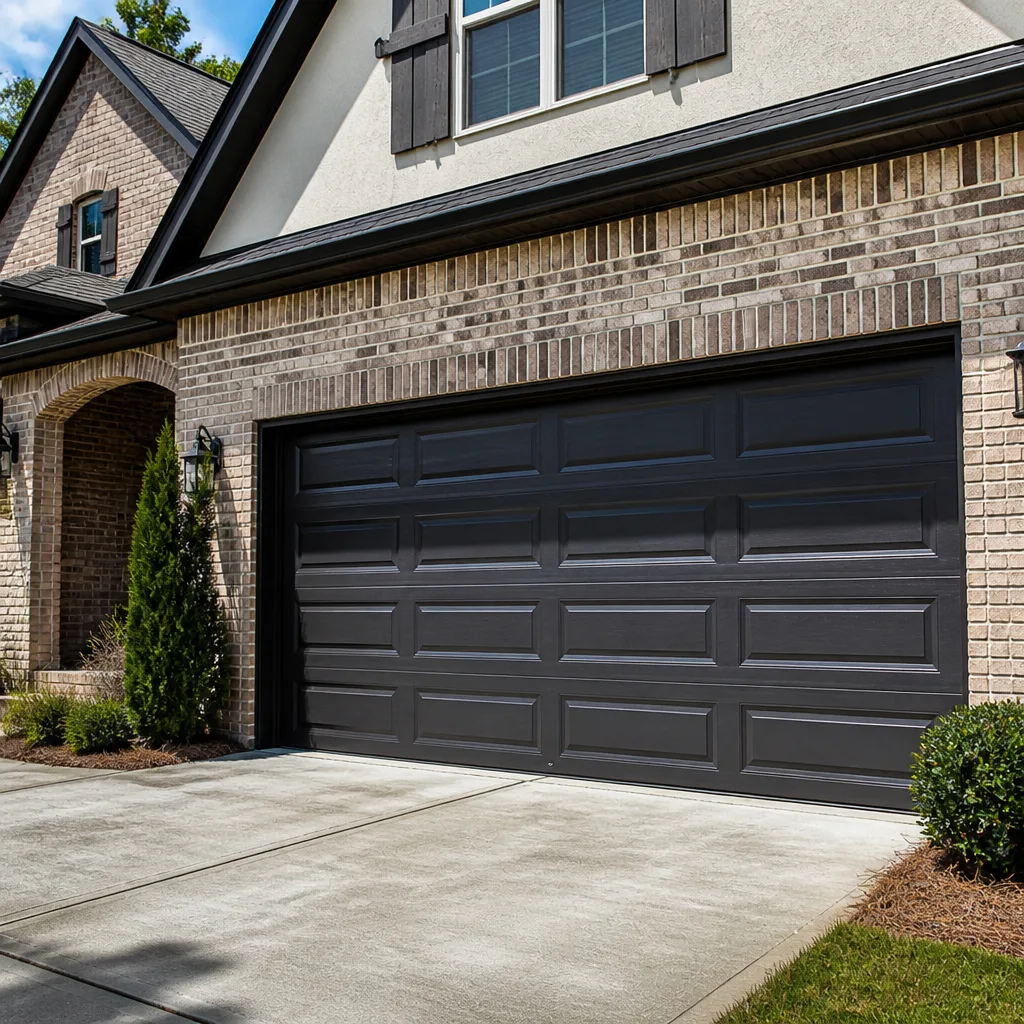 Raised-panel steel
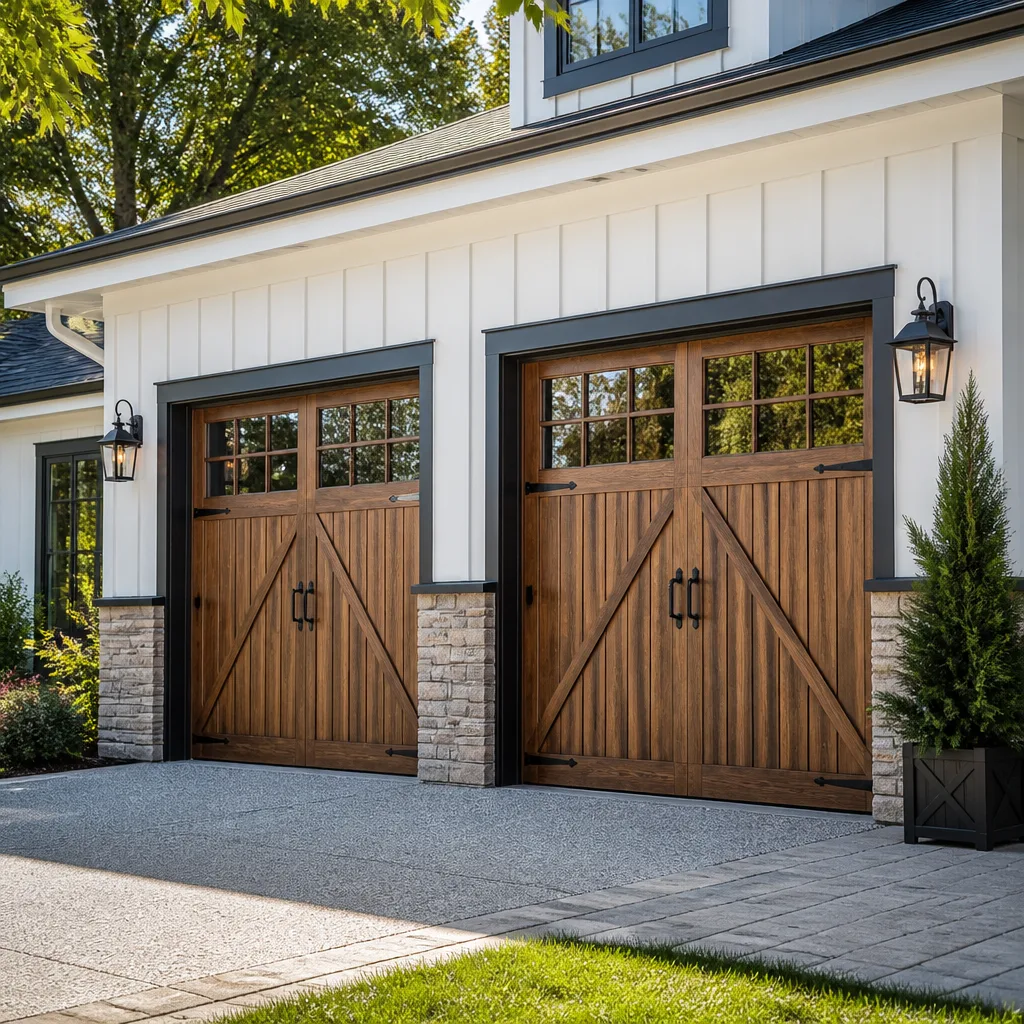 Carriage house
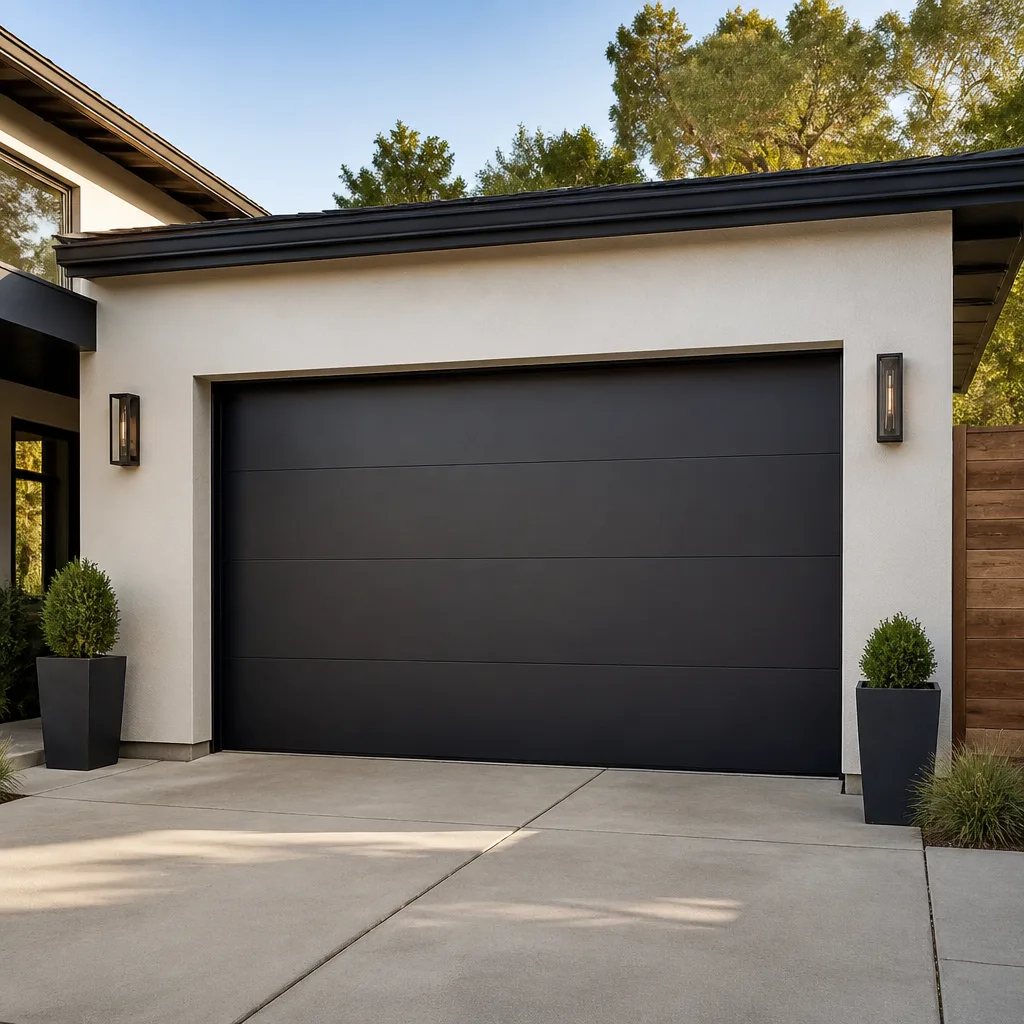 Modern flush
 Full-view glass
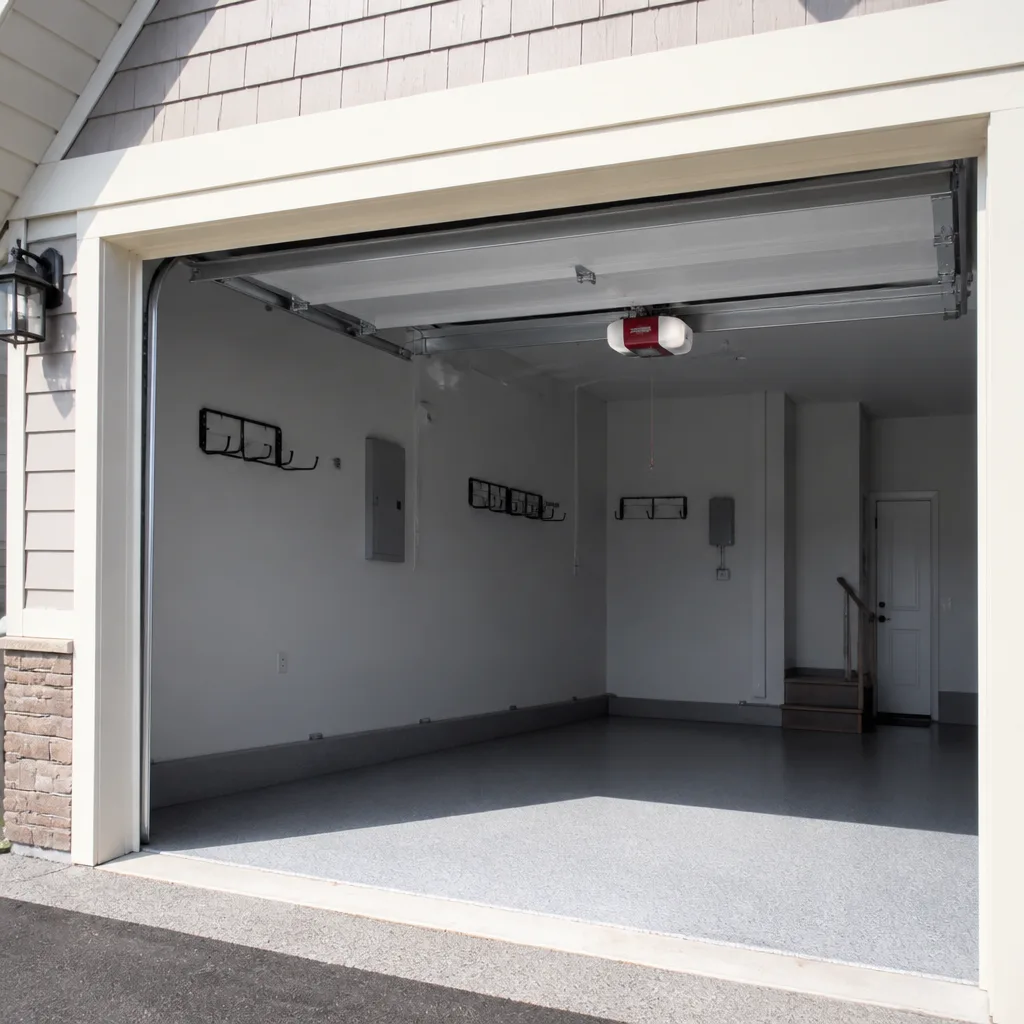 LiftMaster openers
 Chamberlain openers
Full 25-point door and opener safety check with every visit - springs, cables, rollers, tracks, and your LiftMaster or Chamberlain opener included
You get a price before we start. It does not change when the pro arrives.
Get your free estimateGarage Door Permits, Codes & Inspections in Stamford, CT: What You Need to Know
Here’s the part of a garage door replacement most Stamford homeowners never think about until it’s too late: the door itself is the easy decision. The paperwork is where projects quietly go sideways. Plenty of people assume a garage door is a “minor” improvement that slides under the radar, no different from swapping a light fixture. In many cases that’s true. But a full replacement, a structural change, or a door between the garage and the house can pull a Stamford project straight into permit territory, and skipping that step can follow the house through an insurance claim and a future sale. This guide maps exactly when a garage door project needs a permit in Stamford, how the application actually works, what a building inspector looks at, and how to keep everything above board from the first phone call.
Quick Answer
In Stamford, swapping a garage door for a like-for-like replacement of the same size and type usually does not require a building permit, but a new door, a change in door type, structural framing work, or any fire-rated door between an attached garage and the living space typically does. Permit decisions rest with the Stamford Building Department, so the only reliable answer for your address is a call to that office. Get it in writing before work starts, keep the paperwork, and you protect both your insurance and your resale.
Styles & brands we work with
- Raised-panel steel
- Carriage house
- Modern flush
- Full-view glass
- LiftMaster openers
- Chamberlain openers
Table of Contents
- When does a garage door project need a permit in Stamford?
- What Connecticut code says about garage doors and fire separation
- What a Stamford building inspector actually checks
- How unpermitted work affects insurance and a home sale
- The permit application process in Stamford, step by step
- Can your garage door contractor pull the permit for you?
- How Stamford’s weather and housing stock shape the work
- Common mistakes to avoid
When Does a Garage Door Project Need a Permit in Stamford?
A garage door permit in Stamford is usually about structure and safety, not the door panel itself. The city’s Building Department cares whether a project changes the opening, the header above it, the framing around it, or the fire separation between an attached garage and the rooms next to it. Cosmetic or mechanical work that keeps the opening exactly as it is tends to fall outside the permit requirement. Anything that alters the opening or the building envelope moves into permit territory.
Here’s the practical split we walk Stamford homeowners through:
- Like-for-like replacement: Same width, same height, same door type in the same opening. This is the work most commonly done without a permit. Check with the city anyway, because “most commonly” is not “always.”
- New garage door in a new opening: If the opening is being cut, widened, or built as part of an addition, treat it as a structural project. That means a permit.
- Changing door type: Moving from a sectional door to a tilt-up or roll-up, or from a manual door to one with an operator in a new location, can change how the header and tracks carry load. Plan on a permit and an inspection.
- Framing, header, or track support changes: Any cut to a structural member above the opening needs a permit and usually an engineer’s input on the header sizing.
- Attached garage to living space: A door or wall separating an attached garage from the house is a fire-separation element. Changing or replacing that assembly is a permit job in most Connecticut jurisdictions, Stamford included.
We’ve seen Stamford homeowners save themselves a headache by simply asking the Building Department one clear question: “I’m replacing my garage door with the same size and model type. Does this need a permit?” Get the answer in writing, whether that’s an email reply or a stamped note. It costs nothing and settles the matter before a single panel comes off.
What Connecticut Code Says About Garage Doors and Fire Separation
The Connecticut State Building Code governs how a garage door and the surrounding assembly must perform, and the single most important concept for homeowners is fire separation. An attached garage is one of the highest fire-risk zones in a house. Cars, stored fuel, paints, and solvents all live there, and a fire that starts in a garage can reach a sleeping family in minutes if the wall or door between the garage and the living space fails.
That’s why the code treats the boundary between an attached garage and the house as a fire-rated assembly. In plain terms:
- The wall and any door between an attached garage and the living space are treated as a fire-resistance barrier, and the assembly has to meet a rated standard.
- A door in that wall (a service door, not the big vehicle door) generally must be a fire-rated door, self-closing, and solid enough to hold back smoke and flame for the rated period.
- Penetrations through that wall, like wiring boxes or ducts, have their own rules and usually need to be sealed to keep the rating intact.
- The overhead vehicle door itself and its opener wiring are addressed separately, covering structural attachment, safety reversal, and entrapment protection.
We’re garage door specialists, not code officials, and the exact section numbers and rated-hour requirements are things your local building inspector or a licensed contractor will confirm for your specific house. What matters is understanding that the code treats this boundary seriously. A garage door that plugs a hole in a fire-rated wall is not a cosmetic feature; it’s a life-safety component. If a Stamford project touches that assembly, the inspector will want to see it done to the rated standard.
What a Stamford Building Inspector Actually Checks
A garage door inspection in Stamford is short, practical, and specific. The inspector is confirming that the door is installed safely, that the opening is structurally sound, and that any fire separation is intact. In our experience, most inspection failures come down to a handful of common, fixable issues rather than anything exotic.
Here’s what tends to get checked:
- Structural attachment of the tracks and header: Are the vertical and horizontal tracks fastened to sound framing with the right fasteners, and is the header above the opening solid and correctly sized?
- Counterbalance and spring installation: Are the springs mounted safely, is the torsion bar secure, and does the door balance at the halfway point without drifting?
- Safety reversal and entrapment protection: For an operator, does the door reverse on contact with an obstruction, and are the photo-eye sensors mounted at the correct height and aligned?
- Fire-rated assembly integrity: For an attached garage, is the wall and any service door assembly intact, rated, and self-closing, with penetrations sealed?
- Clearances and weather sealing: Does the door close fully against the threshold, and is the perimeter sealed against weather and air infiltration?
- Paperwork match: Do the door and its installation match what the permit application described, including size, type, and location?
Common failure points we see are simple things: photo-eye sensors mounted too high or knocked out of alignment, tracks fastened with drywall screws instead of structural fasteners, a door that doesn’t balance because a spring was sized wrong, and a fire-rated service door replaced with a standard hollow-core door. Any of these can turn a same-day inspection into a return visit. Our garage door repair team checks all of these on every job, permit or not, because they’re the difference between a door that passes inspection and one that doesn’t.
How Unpermitted Work Affects Insurance and a Home Sale
Unpermitted garage door work is a quiet problem that surfaces at the worst moment: during an insurance claim or at the closing table. When a homeowner files a claim after a garage door failure, an insurer can ask whether the door was installed to code and permitted. If the answer is no, the claim can get complicated. We’re not going to claim we’ve seen a specific claim denied; that’s not something we can state as fact. What we can say is that insurers commonly require permitted, code-compliant work, and unpermitted installation is exactly the kind of thing that can slow a claim down.
On the sale side, the issue is disclosure. Connecticut real estate transactions require sellers to disclose known material defects and, in practice, buyers and their inspectors routinely ask about permits for recent improvements. A garage door replacement done without a permit can show up in a title search, in the municipal record, or during a buyer’s inspection. At that point the seller is often looking at retroactive permitting, and sometimes at redoing work to bring it up to code. That’s a much bigger bill and a much bigger hassle than pulling the permit up front.
Here’s the disclosure reality, plainly:
- Fire-rated door changes: If you replaced a door in the garage-to-house wall, keep the permit and inspection record. It answers a buyer’s question before it’s asked.
- Structural changes to the opening: Any header or framing change needs documentation. Lacking it invites a price renegotiation at closing.
- Electrical changes for an opener: New wiring or a new outlet for an opener is typically a permit item too, and it’s the kind of thing a home inspector flags quickly.
Keeping the paper is the whole game. A stamped permit and a passed inspection report are a tiny investment that can protect a six-figure transaction.
The Permit Application Process in Stamford, Step by Step
The Stamford permit process for a garage door project is straightforward once you know the order of operations. The Building Department reviews applications, issues the permit, and then sends an inspector out at the right stage. Exact fees, forms, and review times change, so confirm current details with the department directly, but the sequence looks like this:
- Confirm the permit requirement in writing. Call or email the Stamford Building Department with a clear description of the work. Ask whether a permit is needed and what documents they want. Keep the reply.
- Assemble the application. Expect to need a description of the work, the door spec (size, type, brand, and model), site or plan drawings for structural changes, and the contractor’s details.
- Name the responsible party. Either a licensed contractor pulls the permit as the applicant, or you apply as the homeowner doing your own work. Most Stamford homeowners have the contractor pull it.
- Submit and pay the fee. Fees scale with project value and the type of permit. Get the current fee schedule from the department rather than relying on an old number.
- Wait for review and issuance. Small projects often move through quickly. Structural changes and anything touching a fire-rated assembly can take longer because they involve more review.
- Schedule inspections at the right stage. For structural work, inspection happens after framing and before closing up. For final inspection, it’s after the door is installed and operable.
- Keep the records. Store the permit, the inspection results, and the door’s installation paperwork together. That file is what you hand a buyer or an insurer later.
If a permit requirement or timeline is unclear, don’t guess. The Stamford Building Department is the authority, and a two-minute call settles it.
Can Your Garage Door Contractor Pull the Permit for You?
Yes, a licensed and registered contractor can typically pull the permit on your behalf, and that’s how most Stamford homeowners handle it. The contractor becomes the applicant, carries the responsibility for code compliance, and coordinates the inspections. For you, that means one less phone call and one point of accountability if the inspector wants something changed.
The catch is that you should confirm the arrangement in writing before work starts. Ask three things:
- Will the contractor pull the permit as the applicant, or is it on me?
- Does the written estimate include the permit fee, or is that separate?
- Who schedules the inspection, and who is on site for it?
At Garage Door Repair Stamford Pros, we confirm the permit position before any work starts and set the price in a written estimate before a panel comes off. We work on residential garage doors across the major brands, including Clopay, Amarr, and Wayne Dalton, so we know what the manufacturer’s installation spec calls for and what the inspector will want to see. If your project needs a permit, we’ll walk you through the paperwork and coordinate the inspection. The estimate is free, and the price is agreed before work begins. Call (855) 658-4183 to get started.
How Stamford’s Weather and Housing Stock Shape the Work
Stamford sits in a part of Connecticut that sees real seasonal swing: humid summers, freezing winters, and repeated freeze-thaw cycles. That matters for garage doors, and it matters for inspections, because weather is the slow force that tests an installation over years. Freeze-thaw movement in a driveway apron can shift a threshold. Moisture swings can warp wood jambs and drive rust on steel tracks and hardware. A door that passed inspection at install time and was never monitored can drift out of adjustment within a few seasons.
The housing stock matters just as much. Stamford has everything from older homes with attached garages built decades ago to newer construction, and the older stock often has cold joints, thinner framing, and garages that were retrofitted over time. When we look at an older Stamford garage, we’re checking whether the framing above the opening is adequate for a modern door’s weight and whether any prior change left the fire separation compromised. Neighborhoods like Shippan, Glenbrook, and the West Side have plenty of homes where the garage was built at a different time than the rest of the house, and that history shows up in the framing.
Some practical local points:
- Insulation and sealing: A well-insulated door and a sealed perimeter help an attached garage stay warmer and drier, which reduces rust and warping on the hardware.
- Spring sizing: Cold snaps stress springs. A door that’s hard to lift in January is telling you the springs are near the end of their life, not that the door is “just stiff.”
- Threshold and drainage: Water pooling at the door base after a thaw can rot jambs and freeze the bottom seal in place. Check the slope and the threshold seal every spring.
Spring Safety: Where the Real Danger Lives
Any conversation about garage door work has to pause on the springs. Torsion and extension springs hold enormous tension, and a spring that lets go under load can cause serious injury. We do not recommend homeowners attempt spring replacement themselves, and we don’t provide step-by-step instructions for it. The right move is to have trained technicians with the proper winding bars and safety protocols handle it. Our garage door spring repair specialists treat every spring job as a high-risk task, and that’s exactly the standard you want. A spring that’s been quietly weakening is not a “let’s see if I can do it” project.
Common Mistakes to Avoid
- Assuming a “same size” replacement never needs a permit. It usually doesn’t, but the city decides, not the installer. Call the Stamford Building Department and get an answer in writing.
- Replacing a fire-rated service door with a standard door. This is a fire-separation violation, and it’s one inspectors catch quickly. Use a rated, self-closing door whenever the assembly requires it.
- Fastening tracks with drywall screws. Drywall screws aren’t structural. Tracks need proper fasteners into sound framing, and a failed inspector visit is the least of the problems they cause down the road.
- Not keeping the permit and inspection record. A passed inspection is only useful if you can produce the paper later. Store it with the door’s installation specs.
- Skipping the safety-reversal check after a new opener install. Photo-eye sensors out of alignment or mounted too high are the most common inspection failures we see. Test reversal monthly.
- Letting a handyman handle spring or structural work. Springs and header work carry real risk and code obligations. A garage door specialist has the tools, the training, and the familiarity with the brand’s install spec. When a garage door stops doing its job, call someone who works on doors every day.
- Ignoring a small door problem that’s really a safety problem. A door that doesn’t balance, a cable that looks frayed, or a spring that’s sagged are all early warnings. Fix them before they fail.
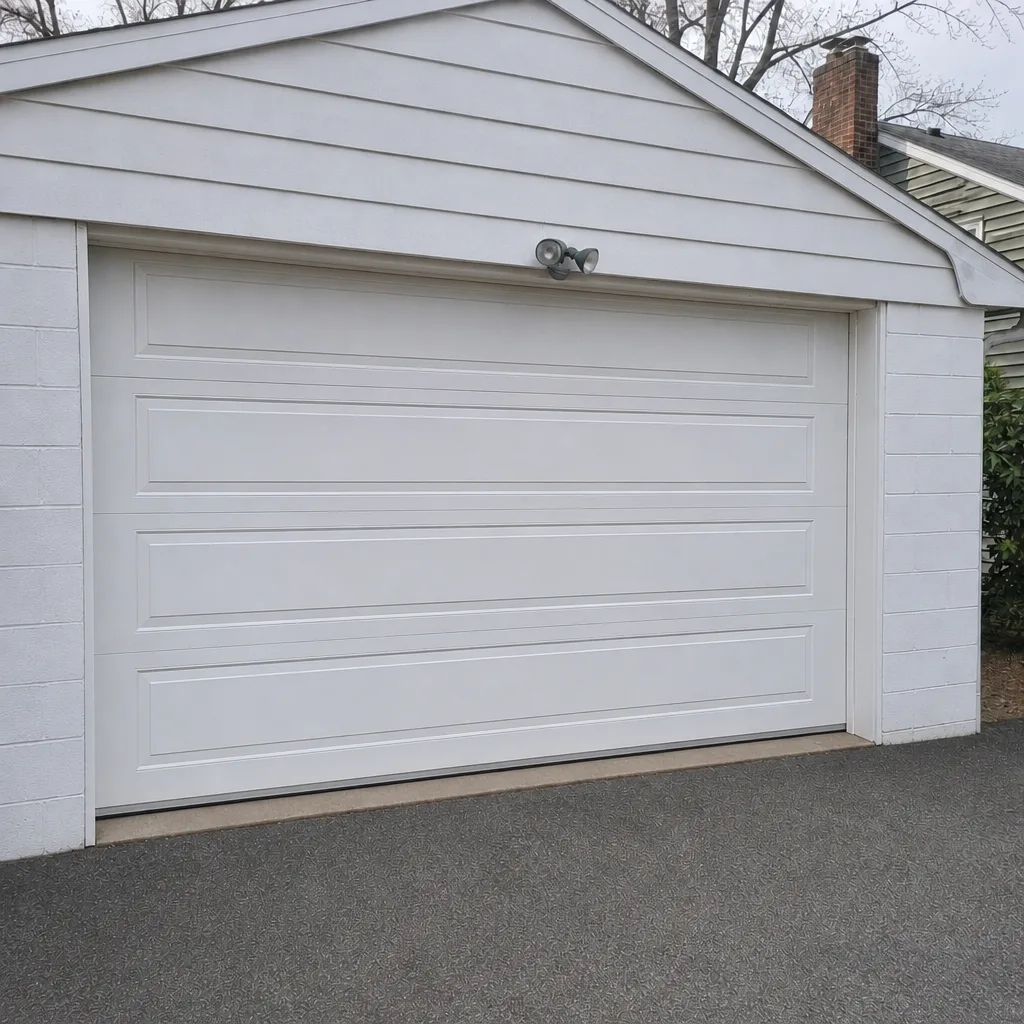
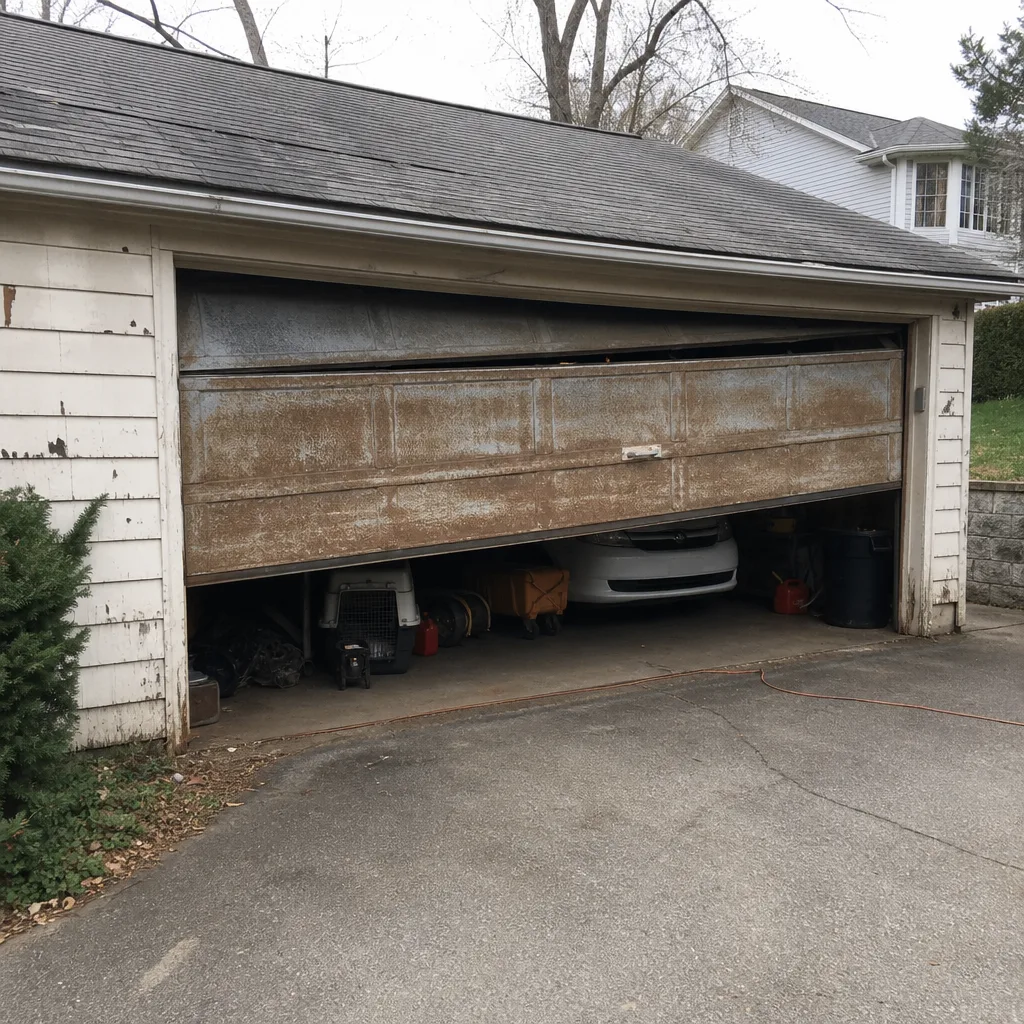
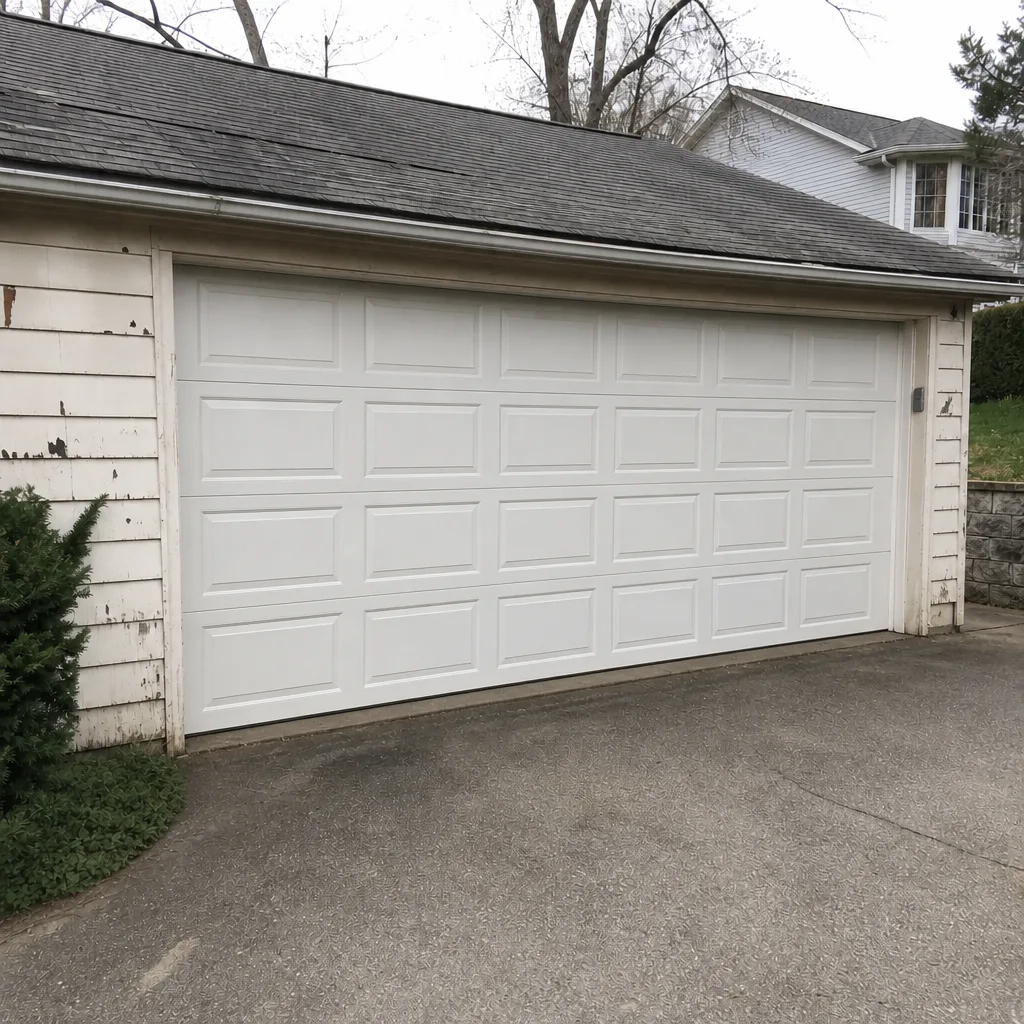
See the difference
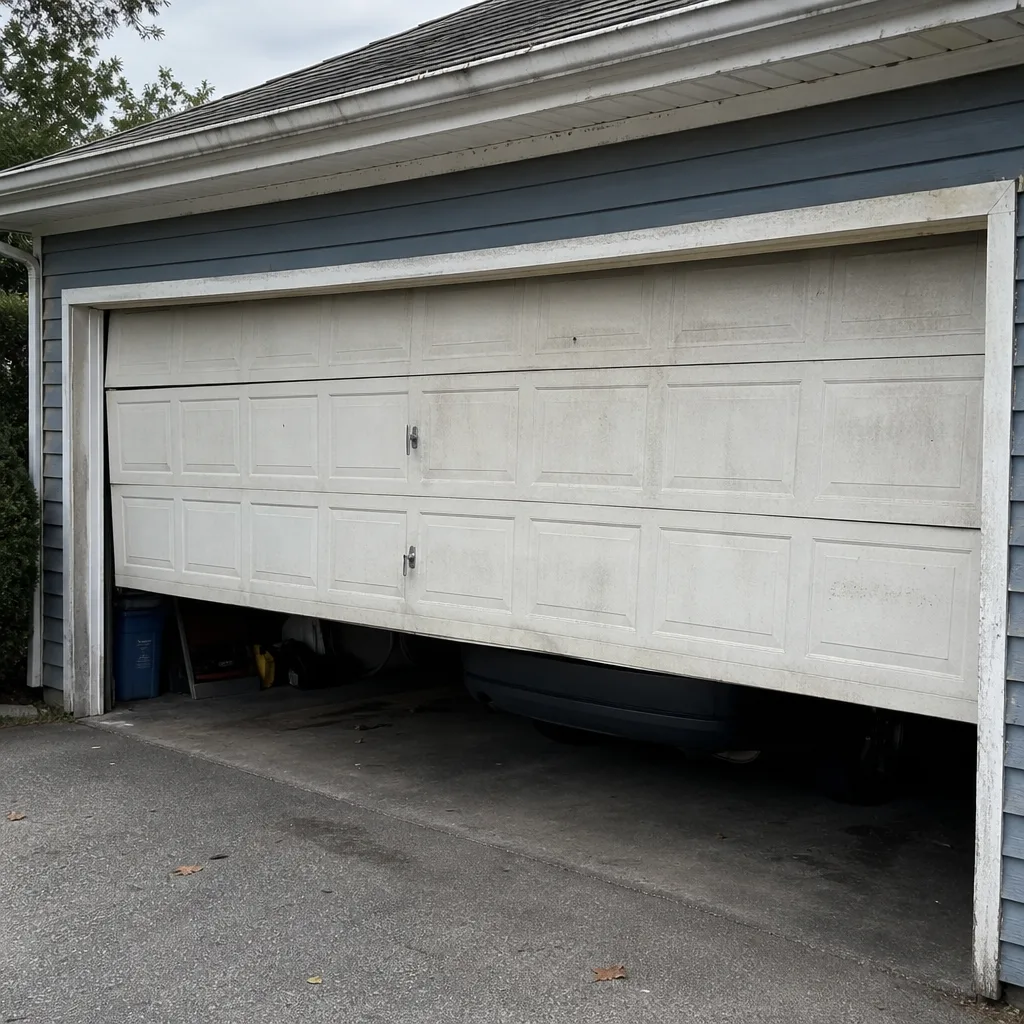 Before
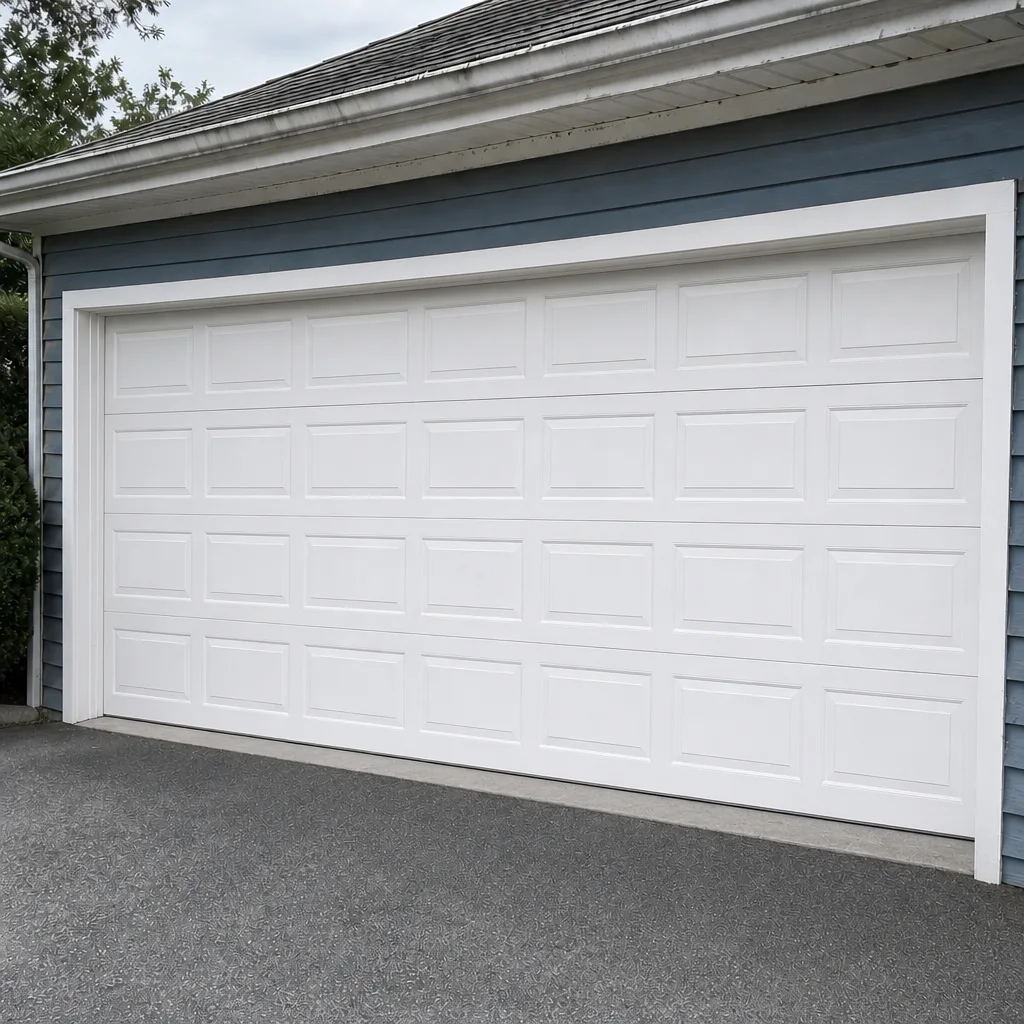 After
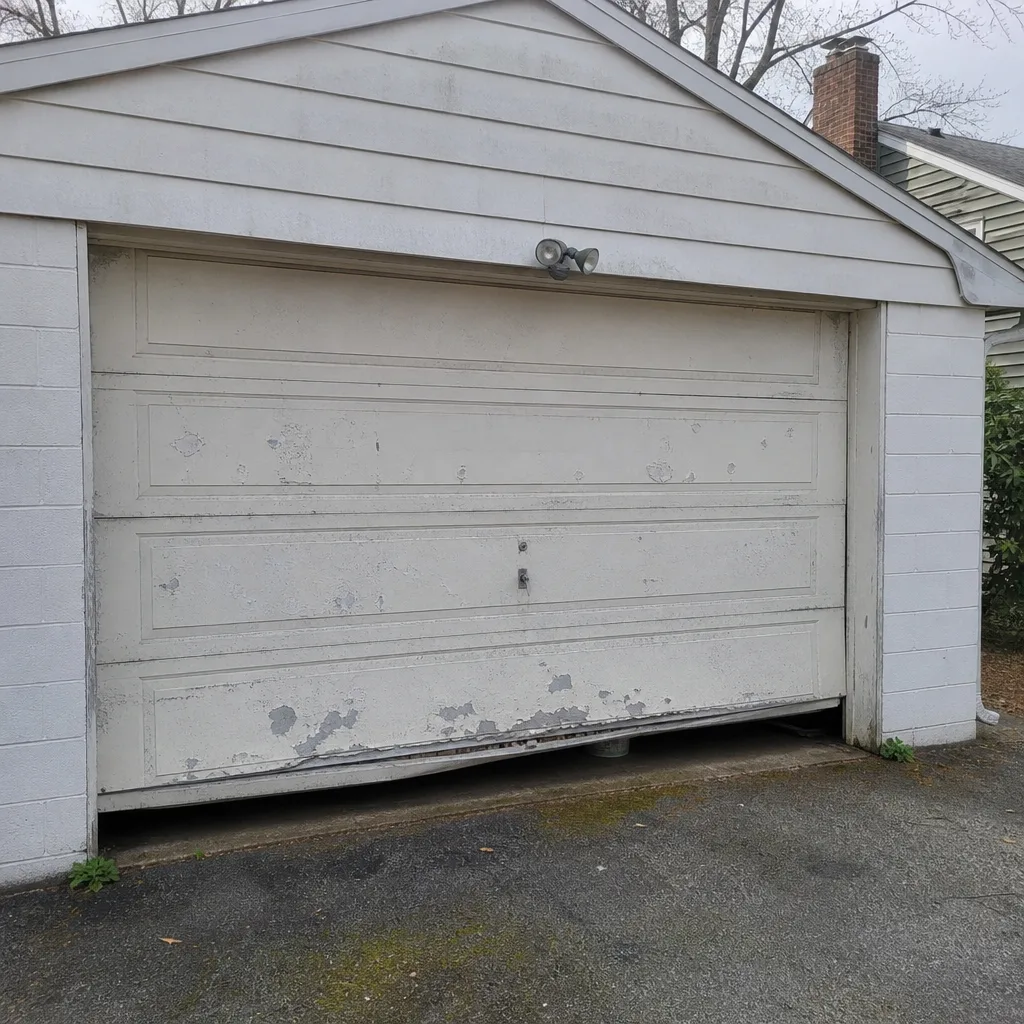 Before
 After
 Before
 After
When to Call a Professional
Some garage door work is simple and safe to handle yourself: cleaning the tracks, lubricating rollers, and resetting a photo-eye sensor. Most of it isn’t. Call a trained garage door specialist when a spring breaks or sags, when a cable snaps or looks frayed, when the door won’t balance or reverses on its own, when the opener’s mounting has pulled loose from the ceiling, when a track has bent out of alignment, or when a structural change is part of a new door install. Springs and cables carry enough tension that a single mistake can cause serious injury, and framing above the opening is structural work with a code obligation attached. We handle the full range of residential garage door repair and installation, so you don’t need a second company for the opener or the panels. Garage Door Repair Stamford Pros offers free estimates in Stamford. Call (855) 658-4183. We answer 24/7. Fast dispatch from 7am to 7pm, Sunday through Friday.
Frequently Asked Questions
Often no, but not always. A like-for-like replacement of the same size and type in the same opening usually does not require a permit in Stamford. A new door, a change in door type, structural framing work, or any fire-rated door between an attached garage and the living space typically does. Confirm with the Stamford Building Department before work starts. Call (855) 658-4183 for a free estimate on the door itself.
Skipping a required permit can complicate an insurance claim and can come up during a future home sale as an unpermitted improvement. Buyers and their inspectors routinely ask about permits on recent work, and municipal records can surface the gap. The fix later usually costs more than pulling the permit up front. Call (855) 658-4183 and we’ll walk through what your project needs.
It depends on the project. Straightforward replacements that need a permit often move through review quickly, while structural changes and anything touching a fire-rated assembly usually take longer because they get more review. Get the current timeline from the Stamford Building Department when you apply, and don’t schedule install until the permit is issued. Call (855) 658-4183 for a free estimate and we’ll help coordinate the sequence.
Yes, in most cases a licensed and registered contractor pulls the permit as the applicant, holds responsibility for code compliance, and coordinates the inspections. Confirm in writing whether the permit is included in the estimate and who is on site for the inspection. We handle the permit coordination as part of the job. Call (855) 658-4183 to get started.
An inspector typically checks structural attachment of the tracks and header, spring and counterbalance installation, safety reversal and photo-eye alignment on any opener, the integrity of any fire-rated assembly, and full closure against the threshold. Common failures include high or misaligned sensors, drywall screws in place of structural fasteners, and improper spring sizing. Our garage door opener repair team tests all of these on every visit. Call (855) 658-4183 for a free estimate.
Insurers commonly require permitted, code-compliant work, and unpermitted installation is the kind of gap that can slow a claim down. We can’t speak for your insurer, so the practical answer is to keep the permit and inspection record and call your insurance company with questions. If a garage door problem is already causing you grief, our Garage Door Repair Stamford Pros team can assess it quickly. Call (855) 658-4183 for a free estimate.
The Bottom Line
A permit for a garage door project in Stamford is usually quick, inexpensive, and easy to forget. The cost of forgetting it isn’t. Unpermitted work can tangle an insurance claim, surface at a home inspection, and come back as a redo at the worst possible time. The safe pattern is simple: confirm the requirement with the Stamford Building Department, get it in writing, have a licensed contractor pull the permit when one is needed, keep the records, and treat any fire-rated door or structural change as permit work every time. That’s a small amount of paperwork protecting a large amount of value. For the work itself, our technicians have up to 10 years of experience across every major brand, and we handle springs, openers, panels, and full installations under one roof. Whether you need a routine garage door repair, a new door measured and scheduled, or a fast response to a door that’s stuck open, we’re one call away.
Contact Garage Door Repair Stamford Pros for a free estimate. Call (855) 658-4183. We answer 24/7. Fast dispatch from 7am to 7pm, Sunday through Friday. Our garage door repair and garage door opener repair teams cover Stamford homes, and our garage door spring repair specialists handle the highest-risk part of the system with the tools and safety protocols it demands.
Written by the team at Garage Door Repair Stamford Pros.