
Last updated November 20, 2026
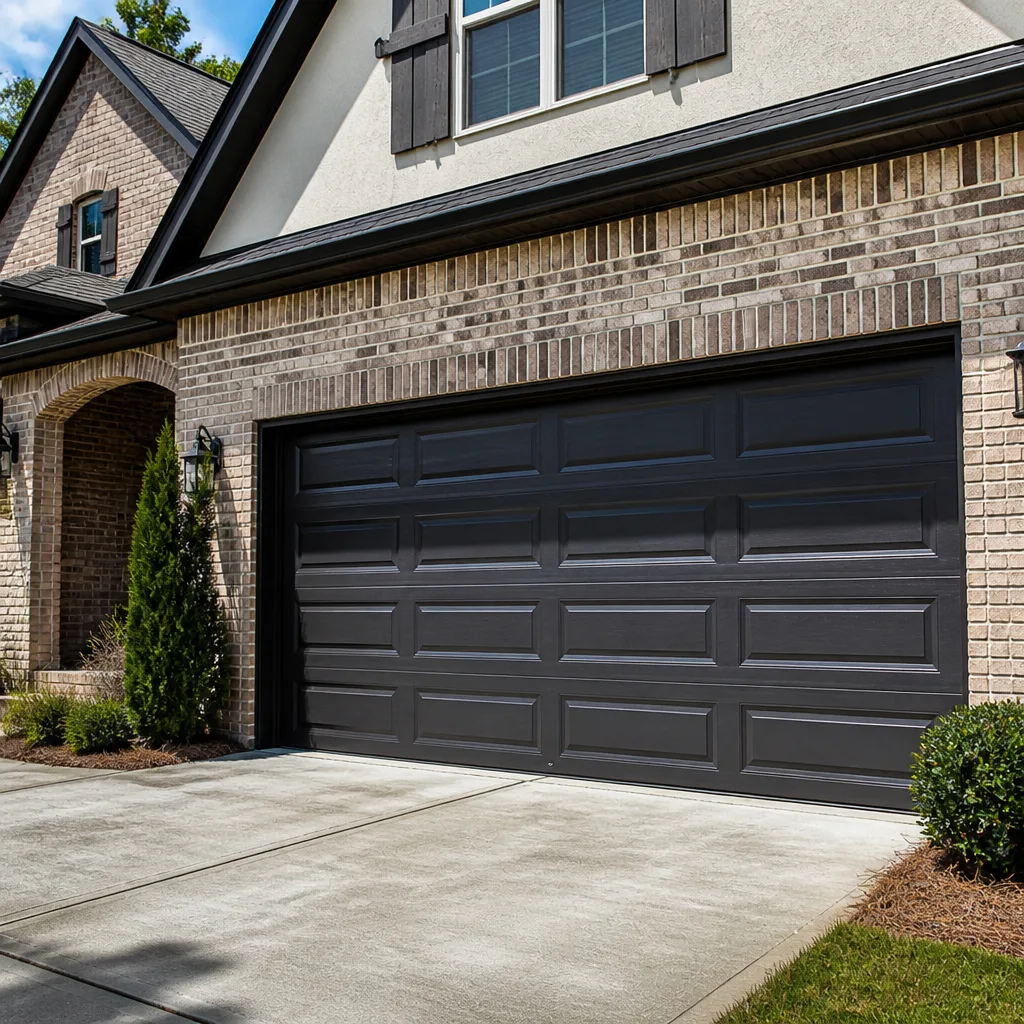 Raised-panel steel
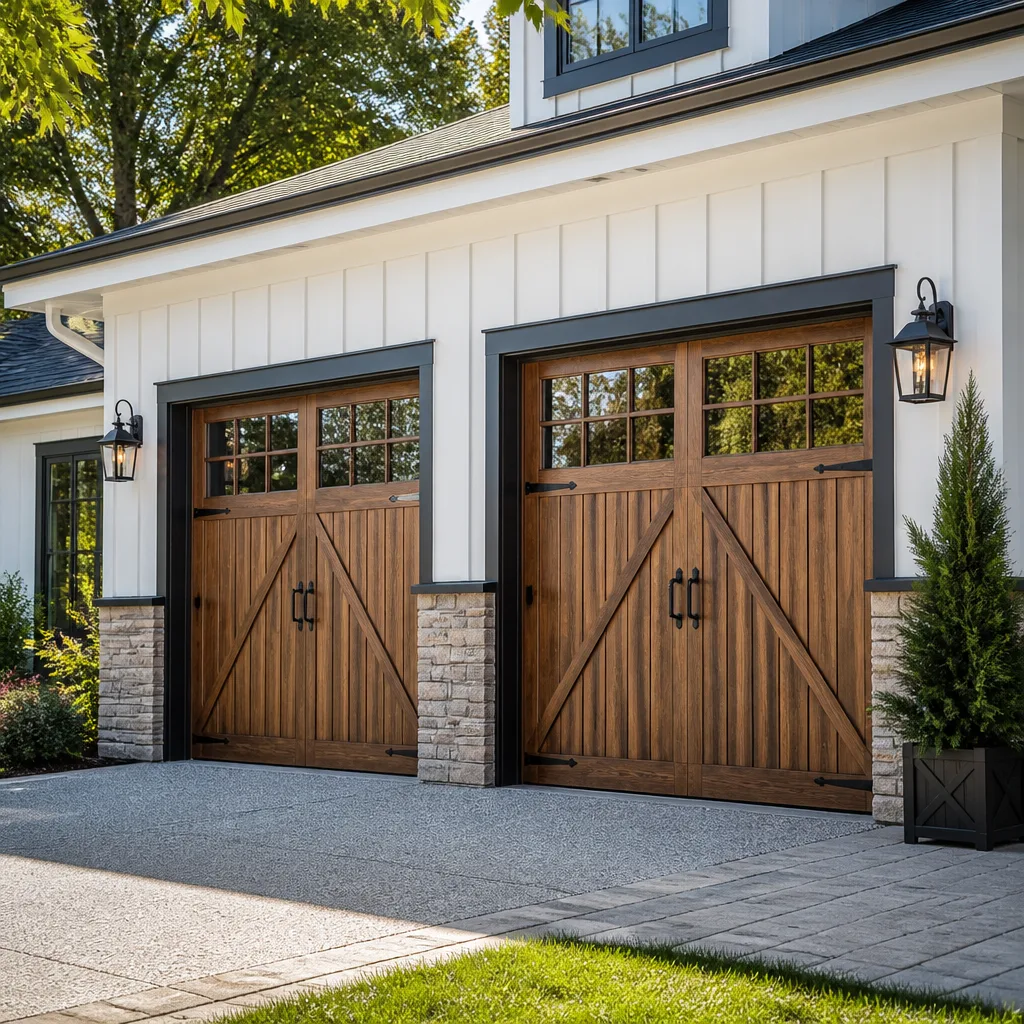 Carriage house
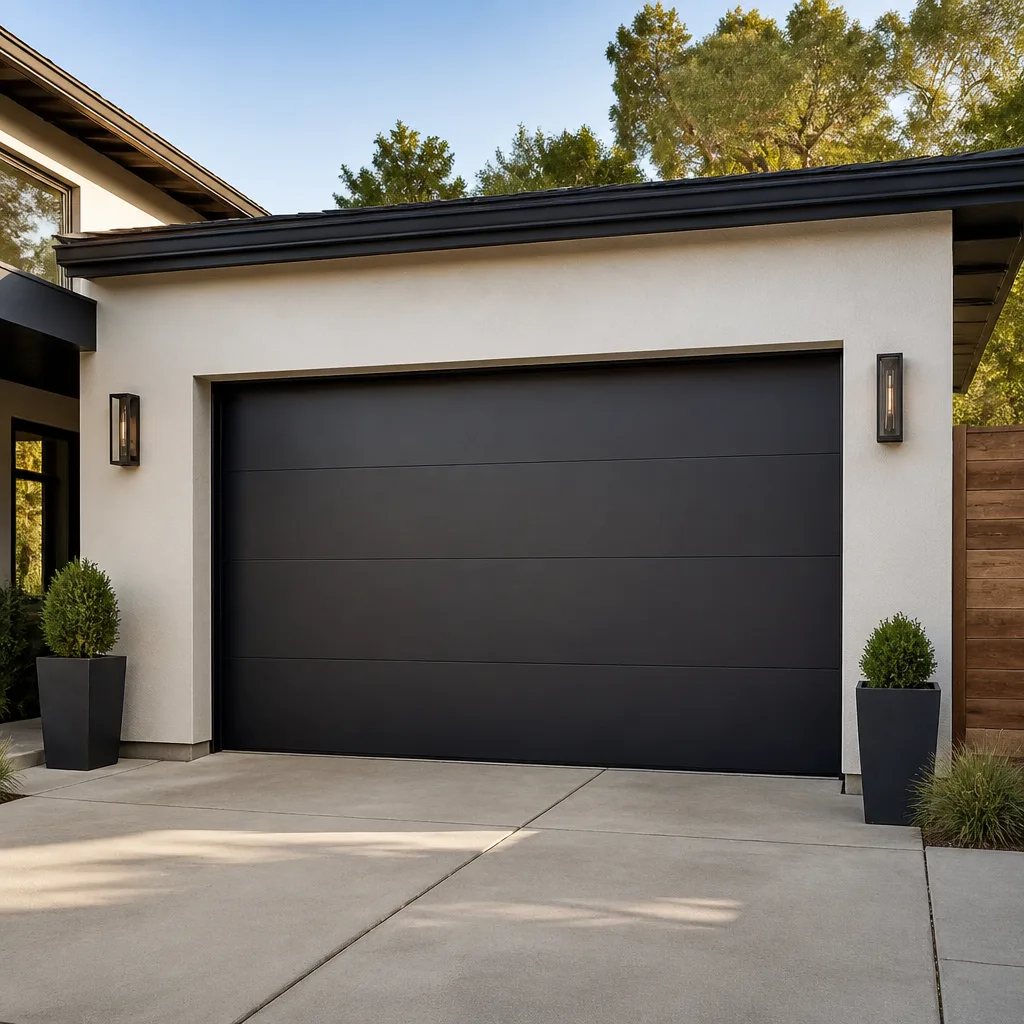 Modern flush
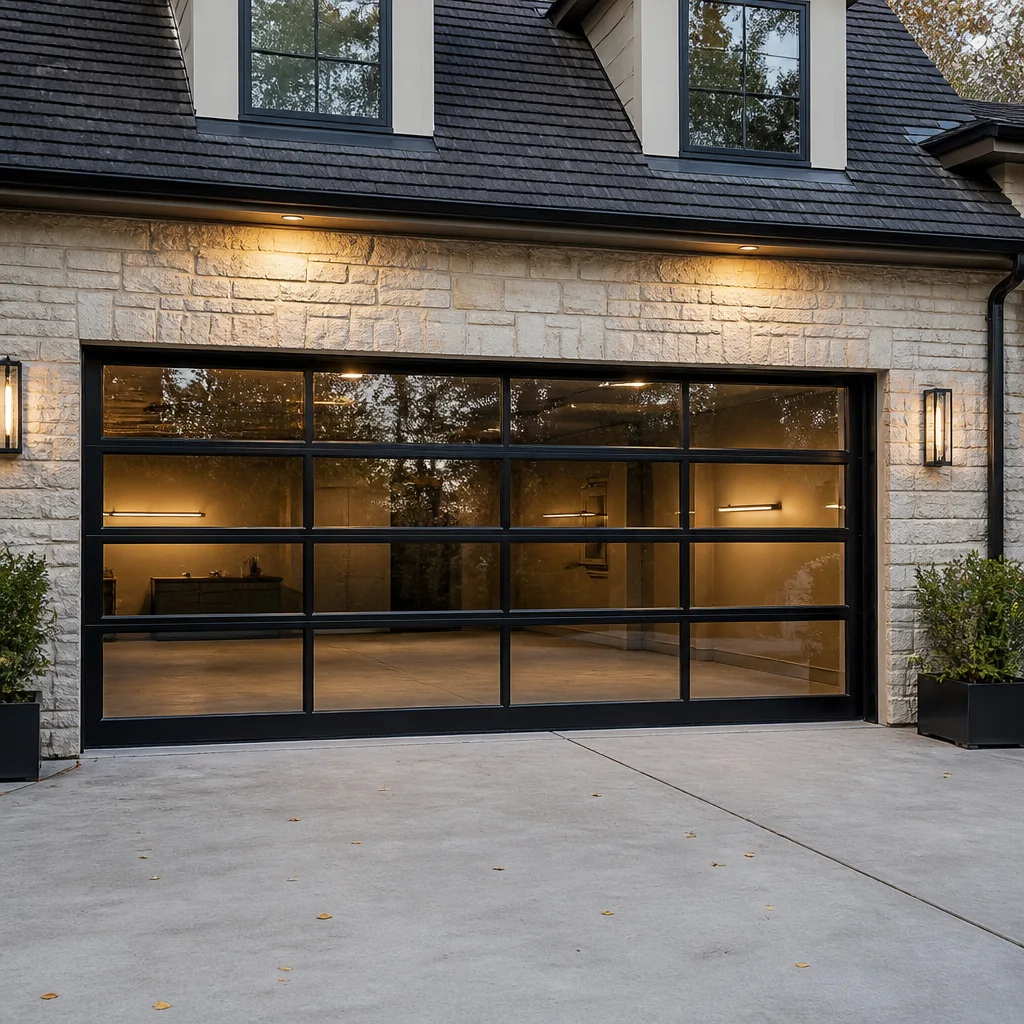 Full-view glass
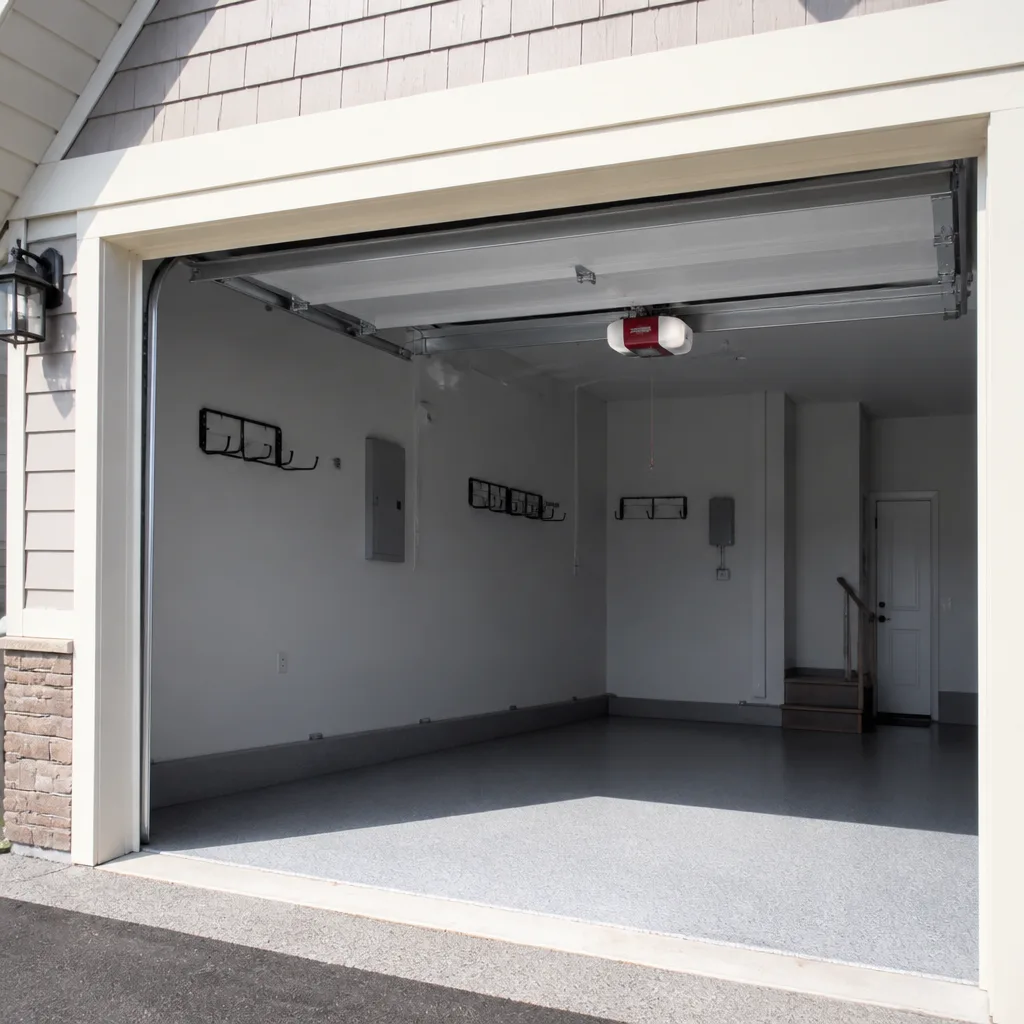 LiftMaster openers
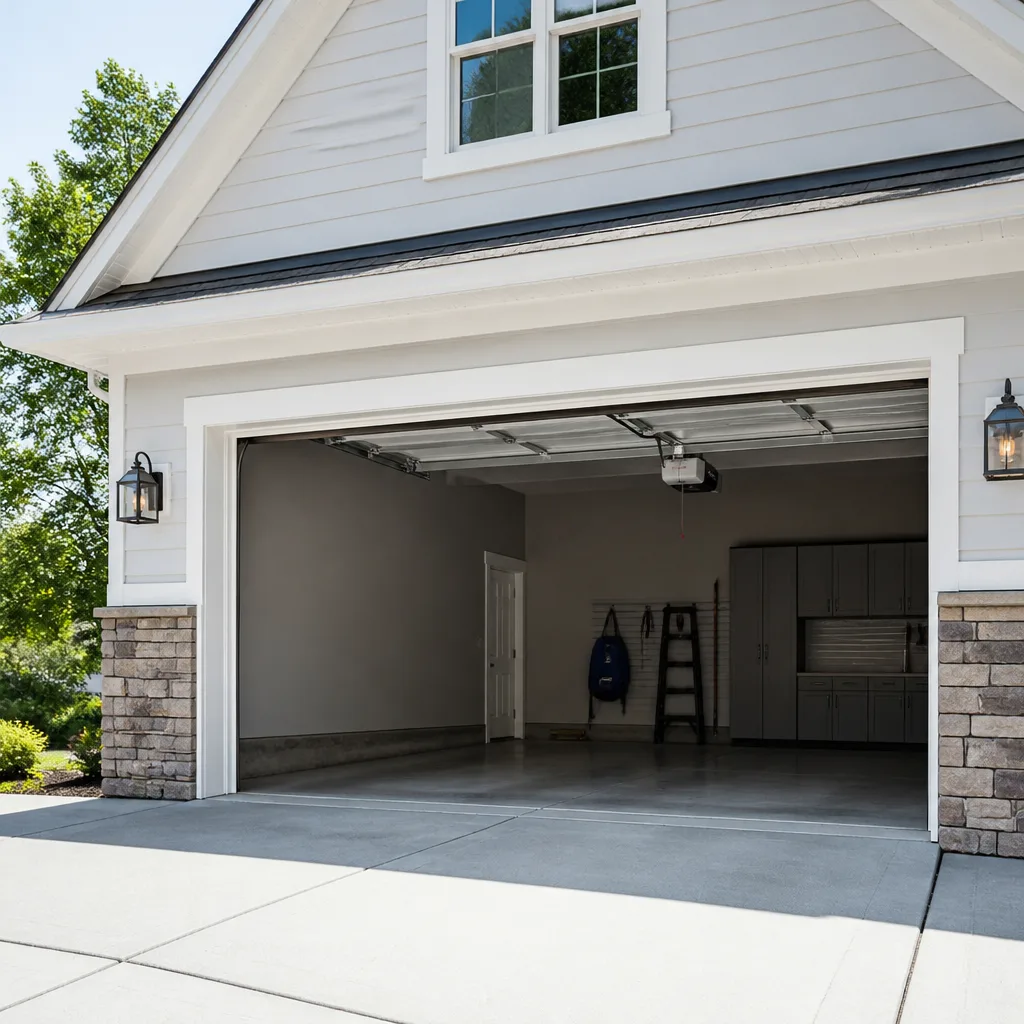 Chamberlain openers
Full 25-point door and opener safety check with every visit - springs, cables, rollers, tracks, and your LiftMaster or Chamberlain opener included
You get a price before we start. It does not change when the pro arrives.
Get your free estimateThe Complete Guide to Garage Doors in Stamford
Most garage door guides are written for a homeowner in Phoenix or Atlanta, and at least half that advice falls apart the moment you apply it to Stamford. This city sits in a pocket of southern Fairfield County where summers run humid, winters swing hard between freeze and thaw, and dense older neighborhoods come with their own rules about what your door can look like. That combination wears on steel, stresses springs, and turns a cheap door into a five-year problem. This guide translates those local conditions into real decisions: which materials hold up, which openers make sense, what insulation actually buys you, and when a job belongs with a specialist instead of a handyman.
Quick Answer
A garage door in Stamford should be chosen for humidity and freeze-thaw resistance first, appearance second, and price third. For most attached garages here, an insulated steel door in the 24- to 27-gauge range with a properly balanced torsion spring system and a modern opener from a brand like LiftMaster or Chamberlain is the sensible default. Repairs, spring replacements, and same-day fixes are separate from installation, which is measured, ordered, and scheduled rather than rushed.
Styles & brands we work with
- Raised-panel steel
- Carriage house
- Modern flush
- Full-view glass
- LiftMaster openers
- Chamberlain openers
Table of Contents
- Why Stamford Wears Garage Doors Differently
- Choosing Door Materials for Stamford’s Climate
- Springs, Tension, and Why They Fail Here
- Insulation and the Attached-Garage Math
- Openers: What Fits a Stamford Home
- HOA and Neighborhood Rules Before You Buy
- Handyman vs. Licensed Garage Door Specialist
- A Simple Maintenance Calendar
Why Stamford Wears Garage Doors Differently
Two forces do most of the damage to a garage door in Stamford, and neither is dramatic. The first is moisture. The second is temperature movement. Together they age a door faster than the same door would age in a drier or steadier climate, and the wear shows up in places homeowners rarely check: the bottom section, the hinges, the springs, and the track.
Stamford’s summers bring stretches of high humidity. Moisture in the air finds bare steel at cut edges, welds, and fasteners and starts the slow creep of surface rust. That rust is cosmetic at first. Left alone, it pits the metal, weakens the bottom section that takes the most splash and grit, and stiffens the rollers that should glide. A door that runs quietly for years can start groaning simply because moisture got into the moving parts and stayed there.
Winter flips the problem. Freeze-thaw cycles mean water gets into small gaps, expands, and pushes things apart. In a garage door, those gaps live around the bottom seal, between panels, and in the hardware. A bottom seal that has hardened and cracked lets meltwater and road grit sit against the door’s lowest edge, which is why the bottom section is usually the first to show rot or rust in this part of Connecticut.
Then there’s the housing stock. Stamford mixes dense older neighborhoods with newer construction, and many attached garages sit directly under living space or share a wall with the house. That matters for insulation, for air sealing, and for how much noise and vibration you’ll tolerate from a door that isn’t balanced properly. A door that’s fine on a detached garage in a mild climate can be a genuine comfort and energy problem when it’s attached to the room where you sleep.
- Humidity drives rust at cut edges, hinges, and rollers.
- Freeze-thaw attacks seals, panel joints, and hardware clearances.
- Road grit and splash collect at the bottom section first.
- Attached garages make insulation and balance a comfort issue, not a luxury.
None of this means a Stamford door is doomed. It means the decisions that matter here are different from the ones national guides push. You choose for moisture and movement, keep the moving parts clean and lubricated, and replace wear items before they take the whole system down. Diagnosing what’s actually failing is the core of good garage door repair, and it starts with understanding which local force is doing the damage.
Choosing Door Materials for Stamford’s Climate
Material choice is the single biggest lever you have on how long a door lasts in this climate. The right answer isn’t the most expensive option; it’s the one whose weak points line up with the local conditions. Here’s how the main options actually behave in Stamford.
Steel
Steel is the most common choice for good reason: it’s strong, it insulates well when filled with foam, and it’s affordable relative to wood. The detail that matters is gauge. A thinner-gauge steel door dents more easily and flexes more under load, which stresses the hardware over time. Heavier-gauge steel holds its shape better and takes the constant opening and closing with less wear. For a humid climate, look for a door with a factory finish and galvanized or otherwise protected steel, and pay attention to the bottom edge, where moisture collects. Names like Clopay and Amarr build steel doors across a wide range, and the spec sheet tells you more than the showroom look does.
Fiberglass and Composite
Fiberglass won’t rust, which is a real advantage where humidity is the enemy. It’s light, which eases the load on springs and the opener, and it resists dents from minor contact. The tradeoff is that fiberglass can crack or craze under impact and doesn’t insulate as well unless it’s built with a foam core. Wood composite sits in a similar spot: it looks warmer than steel, resists moisture better than solid wood, and won’t rot the way raw wood can, but it costs more and still needs care. For a homeowner who wants a wood look without the maintenance headache in this climate, a composite overlay on a steel base is often the practical middle ground.
Wood
Solid wood is beautiful and the most demanding option here. In a humid summer and a freeze-thaw winter, wood moves. It swells, shrinks, and needs regular sealing and repainting to keep water out. If you love the look and you’re willing to maintain it, wood can last a long time. If you want a door you can largely forget about, wood is the wrong pick for Stamford.
Material Comparison at a Glance
- Heavier-gauge steel: best all-around balance of strength, insulation, and cost; watch the bottom edge for rust.
- Fiberglass: rust-proof and light; choose a foam core if insulation matters; can crack on impact.
- Wood composite: wood look with better moisture resistance; higher cost, some upkeep.
- Solid wood: premium look, highest maintenance; best for owners who will keep up with sealing.
Whatever you pick, buy hardware that matches the climate: sealed bearings, corrosion-resistant hinges, and a bottom seal that stays flexible in cold. The door is only as good as the parts that move.
Springs, Tension, and Why They Fail Here
Garage door springs are the highest-tension, highest-risk component in the entire system, and they take the brunt of the constant temperature cycling a Stamford door goes through. A spring is a coiled steel part under enormous stored tension. It does the heavy lifting so your opener doesn’t have to. When a spring fails, it usually does so suddenly and loudly, and the door becomes dangerous or impossible to lift.
Why here specifically? Springs cycle every time the door moves, and they weaken with each cycle. Seasonal temperature swings add stress to the metal and to the surrounding hardware. Moisture accelerates corrosion on the coils and the winding hardware. The result is that springs in this climate tend to demand attention at predictable intervals, and ignoring the warning signs shortens the life of the opener and the door itself.
This is also the part of the trade where DIY goes wrong most often. A wound torsion spring stores enough energy to cause serious injury, and the winding process requires specific tools and a clear understanding of how the tension is set. We don’t hand out step-by-step spring instructions, and no honest specialist will. What you should do instead is recognize the signs that a spring is failing and call for help:
- Listen. A sharp bang from the garage, often while the door is closed, is the classic sound of a spring breaking.
- Watch the door. If it feels unusually heavy, won’t stay up, or slams down, the spring system may be compromised.
- Look at the coils. A visible gap in a torsion spring, or a stretched and separated extension spring, means it’s done.
- Check the balance. Disconnect the opener and lift the door halfway. A balanced door stays put. One that drops or rises on its own needs attention.
- Stop using it. If a spring is broken, don’t keep cycling the door with the opener. That puts the full load on the motor and can damage it.
Specializing in garage door spring repair means we bring the right winding tools and safety practices to a job that deserves both. Our technicians have up to 10 years of experience, and this is the repair where that experience matters most. If you suspect a broken spring, treat it as urgent and leave the door alone until a trained technician takes a look.
Insulation and the Attached-Garage Math
Insulation is where a lot of Stamford homeowners under-calculate. If your garage is attached to the house, it shares at least one wall, often a ceiling, and sometimes the space above living areas. An uninsulated garage door is a thin barrier between your heated home and the cold outside, and during the heating season that gap costs you comfort and money in ways that aren’t obvious on the utility bill.
Here’s the reasoning to work through. A single-pane, uninsulated door has little resistance to heat flow. Cold air pools against it, and any shared wall loses heat to that cold space. The colder the garage, the harder your heating system works to hold the rooms next to it at temperature. A well-insulated door slows that heat loss and keeps the garage itself more usable in winter, which matters if you park there, store things there, or use it as a workroom.
The right insulation level depends on how the garage is used and how it’s built. An attached garage under living space benefits most from an insulated door. A detached garage you only use for storage benefits less, and you can weigh that against the cost. When you’re comparing doors, look at how the insulation is built: a door filled with polyurethane foam generally insulates better per inch than one filled with polystyrene, and a full-panel foam core beats a door with no core and a thin skin.
- Attached garage under a bedroom or living space: prioritize insulation; the comfort gain is real.
- Attached garage with a shared wall: insulated door plus air sealing around the perimeter makes a measurable difference.
- Detached garage used for storage: insulation is optional; spend the money on a heavier-gauge door instead.
- Garage used as a workshop or gym: insulate; you’ll feel it in winter.
Don’t stop at the door. The seal around the perimeter, the bottom seal, and the weatherstripping do as much work as the panel insulation. A perfectly insulated door with a gappy bottom seal still leaks cold air. Air sealing is cheap and it pays back every heating season.
Openers: What Fits a Stamford Home
An opener is a motor and a set of electronics, and the differences between models matter more than the label suggests. We’re factory-familiar with 8 of the industry’s top brands, including LiftMaster, Chamberlain, Genie, Clopay, Amarr, Wayne Dalton, Craftsman, and Raynor, which means we diagnose faster and source the correct parts the first time instead of guessing.
For most homes here, the practical questions come down to a few things. How heavy is the door? A heavier insulated door needs a stronger opener, and a belt-drive model runs quieter, which helps when the garage sits under living space. Do you want app control? Smart openers from LiftMaster, Chamberlain, and Genie let you check and operate the door from your phone, which is handy if you’re the type who wonders whether you left it open. Battery backup is worth considering too, since a power outage with a car inside is a real inconvenience.
What you don’t want is an opener that fights the door. If a door is unbalanced, a powerful opener will force it up and down and wear out the motor, the springs, and the door. Get the door balanced first, then size the opener to it. Our garage door opener repair work starts with that diagnosis, because a failing opener is often a symptom of a door problem rather than a motor problem.
Opener Quick-Reference
- Belt-drive: quietest, best for garages under bedrooms or living space.
- Chain-drive: durable and cost-effective; noisier, better for detached garages.
- Smart-connected: app control and alerts; useful for frequent travelers and families.
- Battery backup: lets you open the door during a power outage.
HOA and Neighborhood Rules Before You Buy
Before you order a door, check what your neighborhood allows. Stamford has a range of housing types, and plenty of subdivisions and associations set rules about exterior appearance. A door you love could fail an architectural review if the panel style, color, or material doesn’t match the community standard. The time to find that out is before the door is ordered, not after it’s sitting in your driveway.
The process usually looks like this. Start with your association documents or your property manager and find the architectural review requirements. Many associations maintain an approved color palette and a list of acceptable styles. If you’re in an older or historic neighborhood, there may be guidelines about preserving a certain look. Ask what the review process requires, how long it takes, and what documentation you’ll need. Then bring that to your installer so the door you choose meets the rules the first time.
- Find your association’s architectural or exterior modification rules.
- Get the approved color and style list if one exists.
- Confirm the review process and timeline before ordering.
- Share those requirements with your installer so the order matches the rules.
- Keep your approval in writing in case questions come up later.
For neighborhoods where appearance is tightly managed, a steel door with a carriage-house panel style and a factory finish often threads the needle: it looks appropriate, resists the climate, and comes in colors associations tend to approve. The cost of getting this wrong is reordering a door, so a little homework up front saves real money.
Handyman vs. Licensed Garage Door Specialist
A general handyman can handle a lot of small home repairs, and there’s no shame in hiring one. But a garage door is a specialized mechanical system under high tension, and the line between what a generalist should touch and what belongs with a specialist is worth knowing. The distinction protects your safety and your wallet.
Where a handyman is usually fine: lubricating hinges and rollers, adjusting a photo-eye that got bumped, replacing a wall-mounted opener button, or clearing an obstruction from the track. Those are low-risk tasks with straightforward fixes.
Where a specialist belongs:
- Spring work. High tension, serious injury risk, needs proper winding tools and procedures.
- Cable replacement. Cables are under tension and can snap violently if handled wrong.
- Track alignment and panel replacement. A misaligned track can send a door off its rails.
- Opener diagnosis and replacement. Matching the motor to the door and wiring it correctly takes trade knowledge.
- Full door installation. Measuring, ordering, and installing a new door correctly is its own skill set.
There’s also a licensing angle. Connecticut, like most states, expects this kind of work to be done by someone properly licensed and insured for it, and requirements vary by trade and locality. If you’re unsure what applies to your job, ask the company you’re hiring how they’re credentialed. The local pro should be licensed and insured as their state requires, and a specialist who focuses only on garage doors will know the standards cold. That singular trade focus is why Springs, openers, panels, and full installs all belong with one call rather than three.
We handle both residential repair and complete new installation, so a homeowner never has to call a second company to finish the job. Diagnosed right, fixed right, the first visit: that’s the standard a specialist should hold.
A Simple Maintenance Calendar
A little routine care goes further in Stamford than in a milder climate, because moisture and temperature swings are working against the door every season. You don’t need to be handy to do most of this. You just need to look, listen, and lube on a schedule.
- Monthly: listen and look. Run the door and pay attention to new noises, grinding, or jerky movement. Check the bottom seal for cracks.
- Monthly: clear the tracks. Wipe out grit and debris; don’t lubricate the tracks themselves, but do lubricate the rollers, hinges, and springs lightly with a proper garage door lubricant.
- Quarterly: test the safety reverse. Put a small object in the door’s path and confirm it reverses. Check that the photo-eyes are aligned and clean.
- Seasonally: check the balance. Disconnect the opener and lift the door halfway; it should stay put.
- Before winter: inspect the bottom edge. Look for rust, rot, or a hardened seal that will let meltwater in.
- Spring: wash and inspect the finish. Clean the door and touch up any chips or scratches before rust takes hold.
- Yearly: book a professional tune-up if the door is older or you’ve noticed any change in how it runs.
This calendar is general guidance rather than a substitute for professional inspection. If something feels off, stop cycling the door and get it checked. A small fix caught early is far cheaper than a spring failure that takes the opener with it.
Common Mistakes to Avoid
- Buying on looks alone. A door chosen for curb appeal without regard to gauge, insulation, or moisture resistance can look great and fail early in this climate. Check the specs, not just the style.
- Ignoring the bottom section. The lowest part of the door takes the most splash and grit, and it’s the first to rust or rot here. Inspect it before winter, every year.
- Forcing a heavy door with a struggling opener. If the door is hard to lift, the problem is usually balance or springs, not the motor. Replacing the opener first wastes money and damages both.
- Tackling spring work yourself. A wound spring stores dangerous energy. This is the one repair where the risk of injury is real and the tools are specialized. Leave it to a trained technician.
- Ordering a door before checking HOA rules. Architectural review can reject a door for style or color. Get approval in writing before you buy.
- Skipping the perimeter seal. An insulated door with a leaky bottom seal and weatherstripping still leaks cold air. Seal the whole opening, not just the panels.
- Letting small noises wait. A new grind or groan is usually a cheap fix caught early and an expensive one caught late. Address changes in how the door runs before they grow.
See the difference
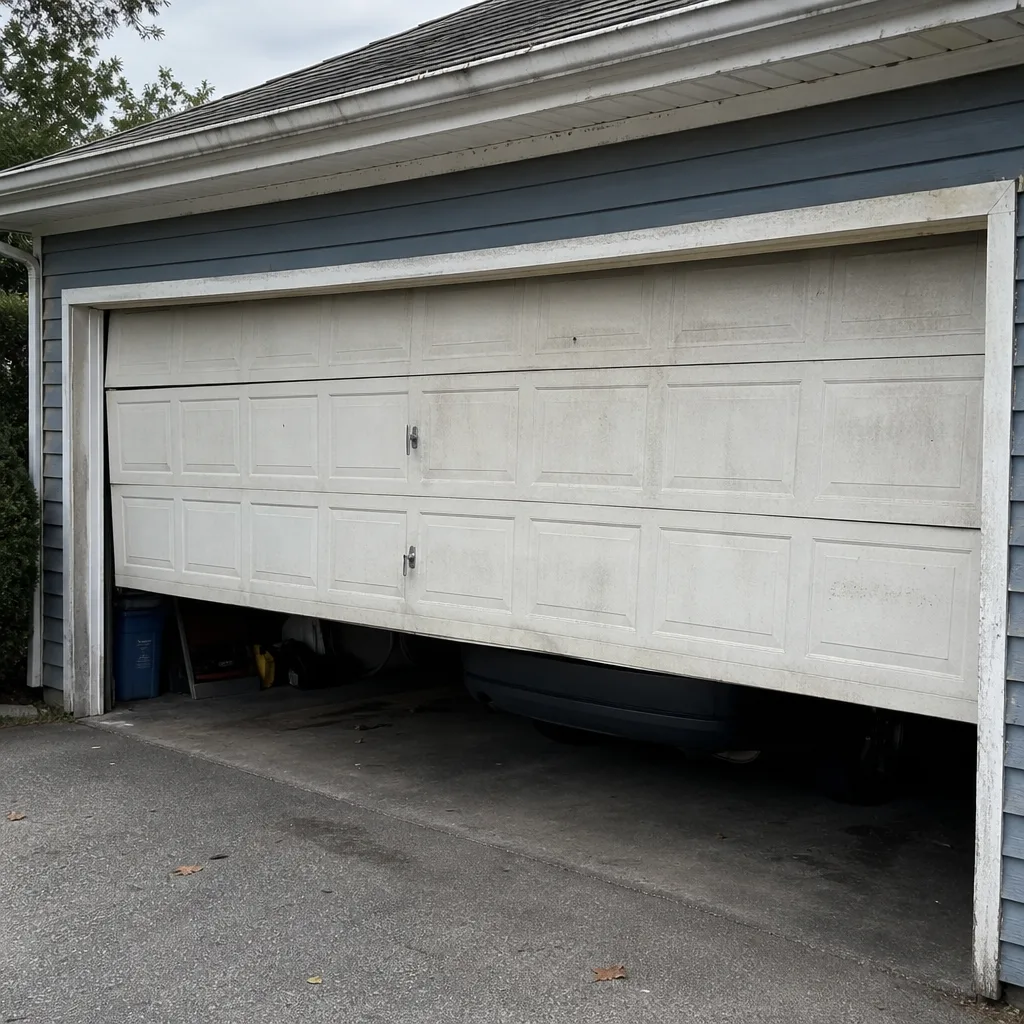 Before
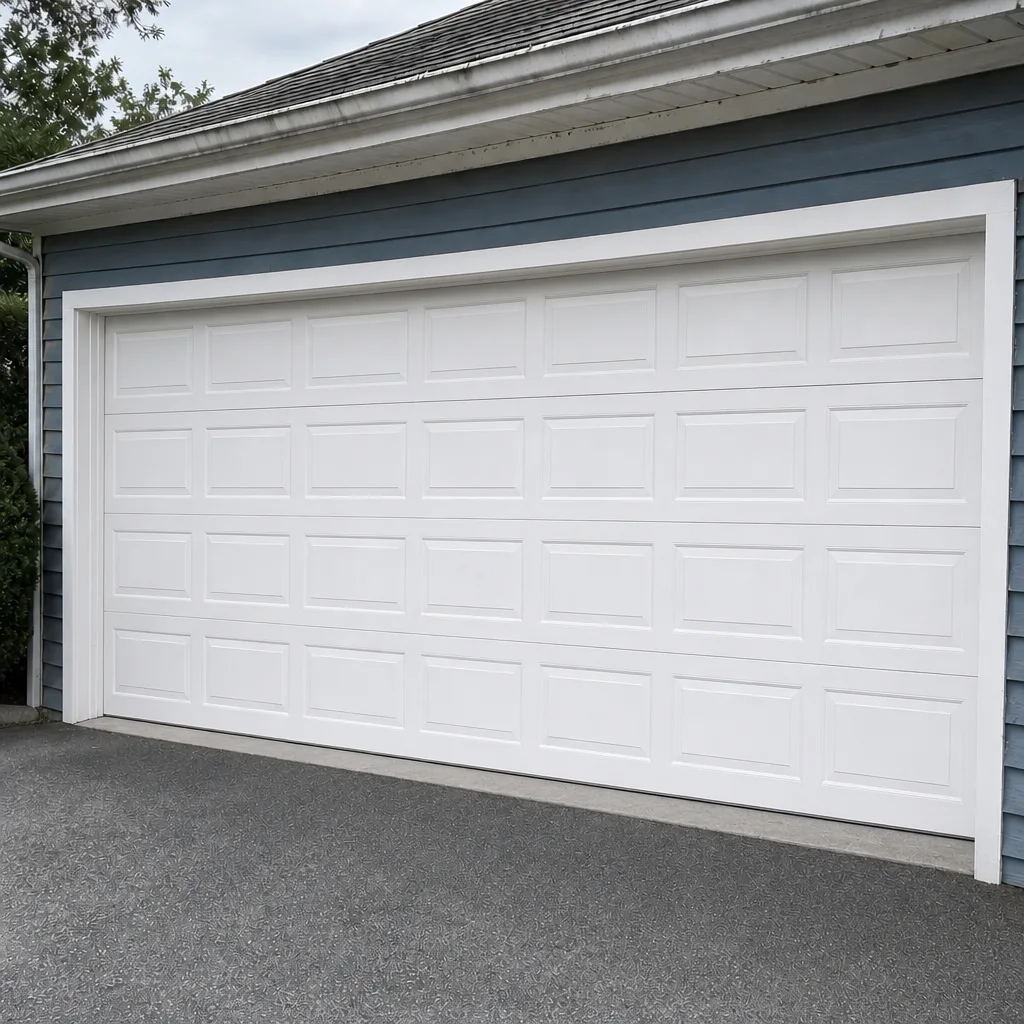 After
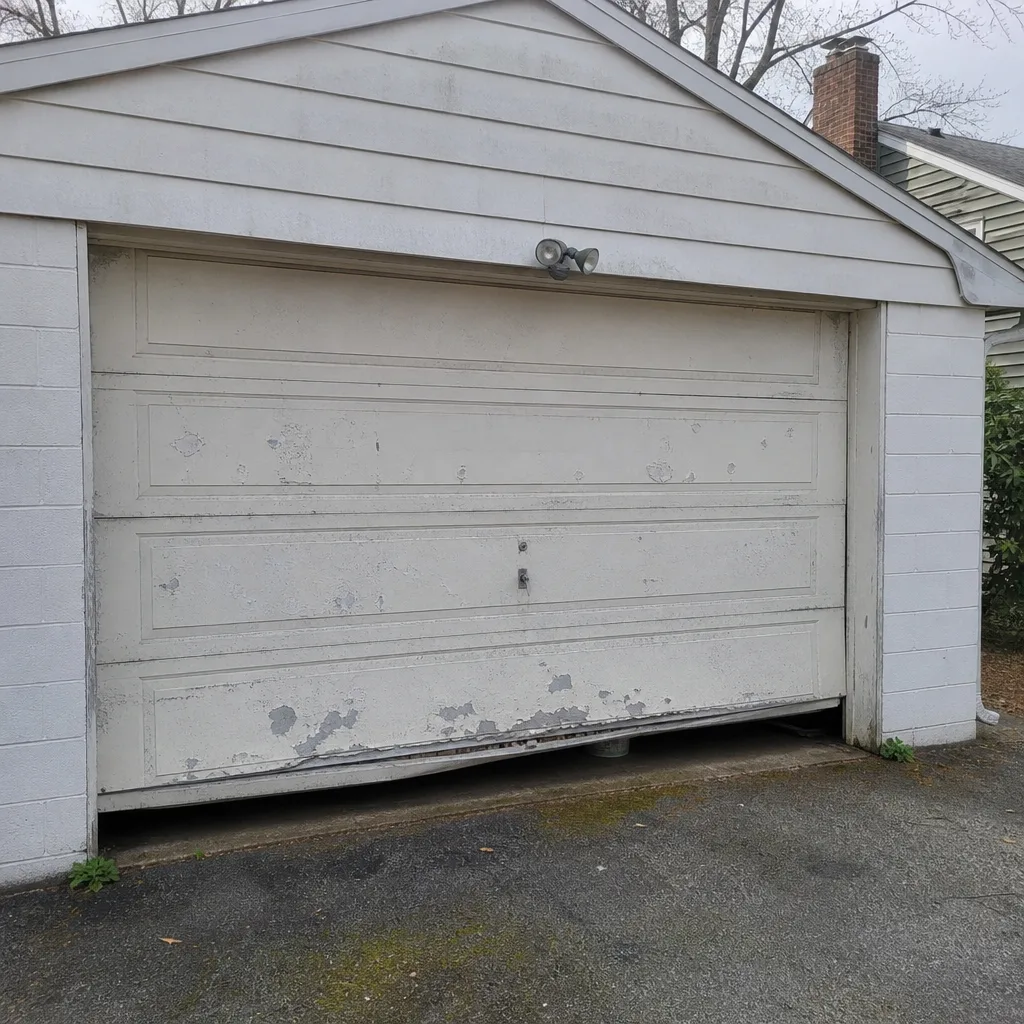 Before
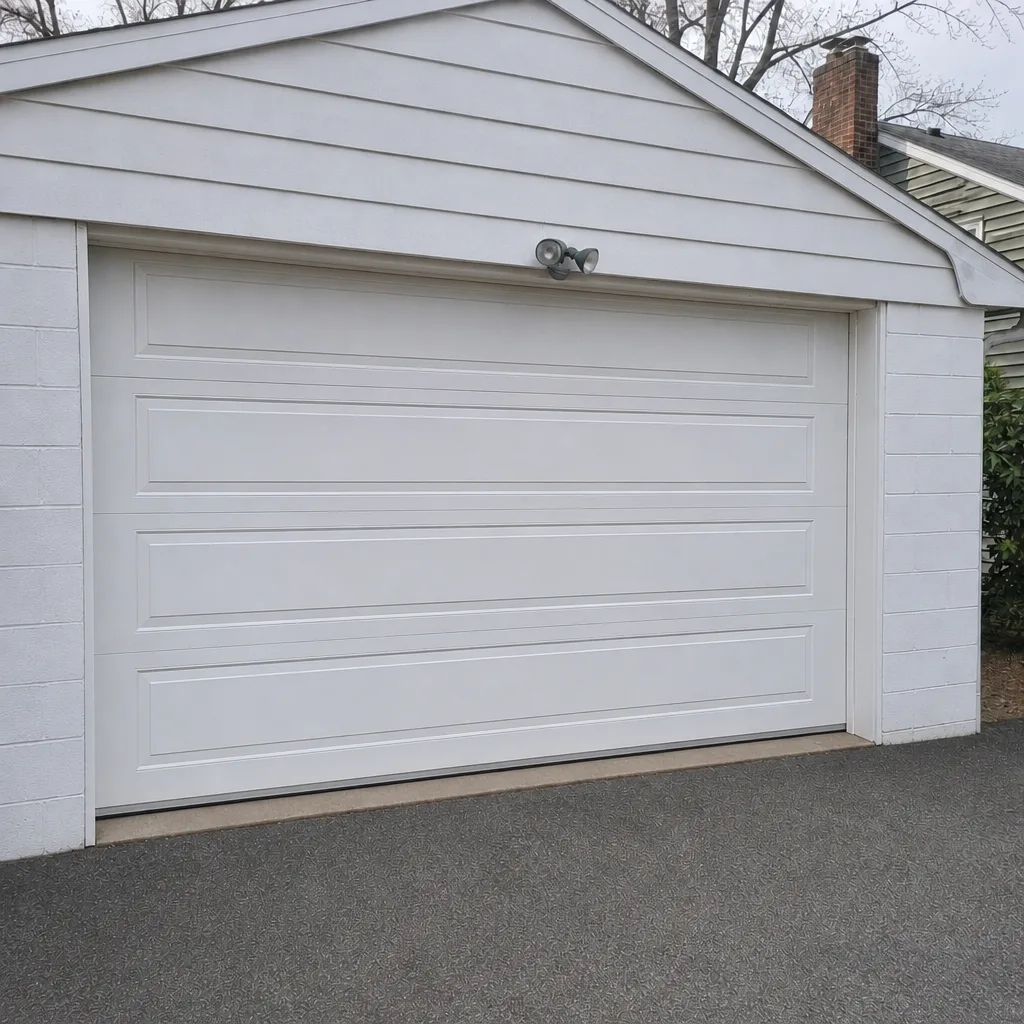 After
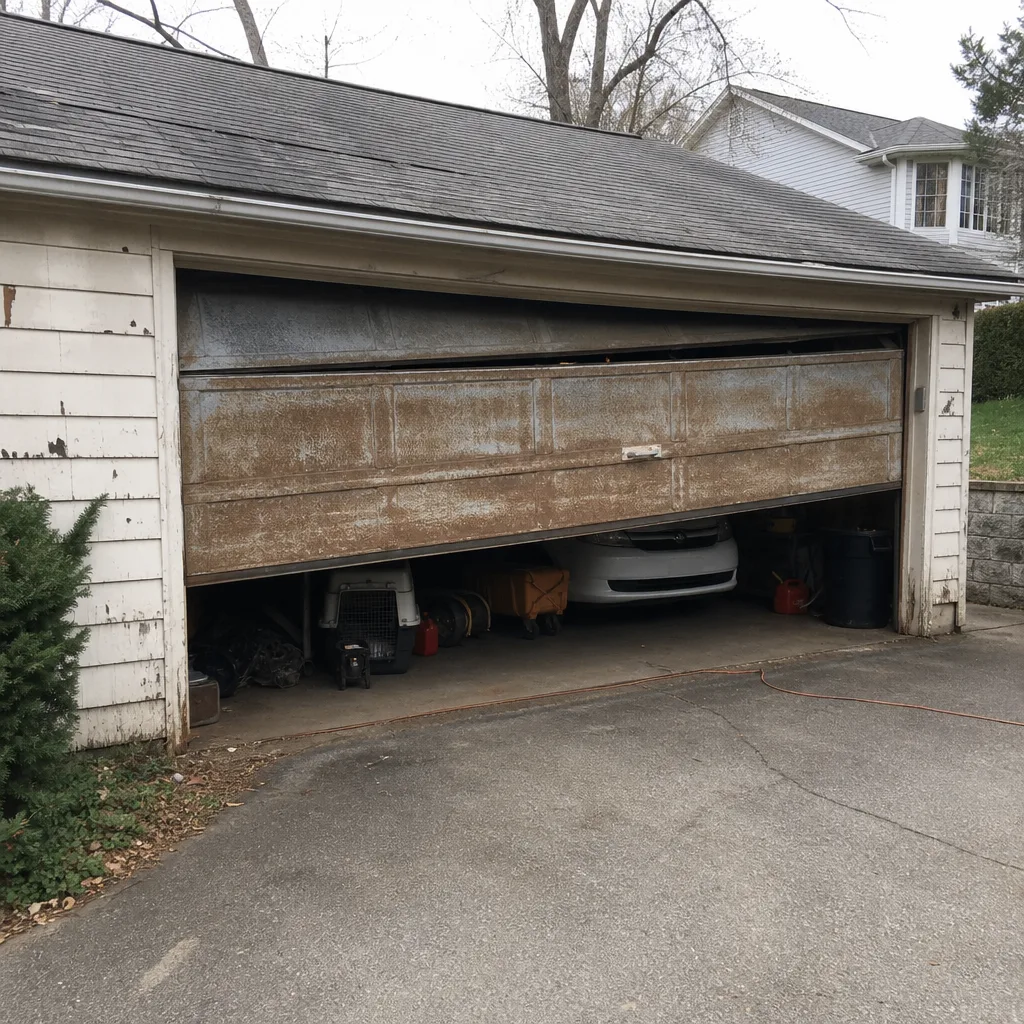 Before
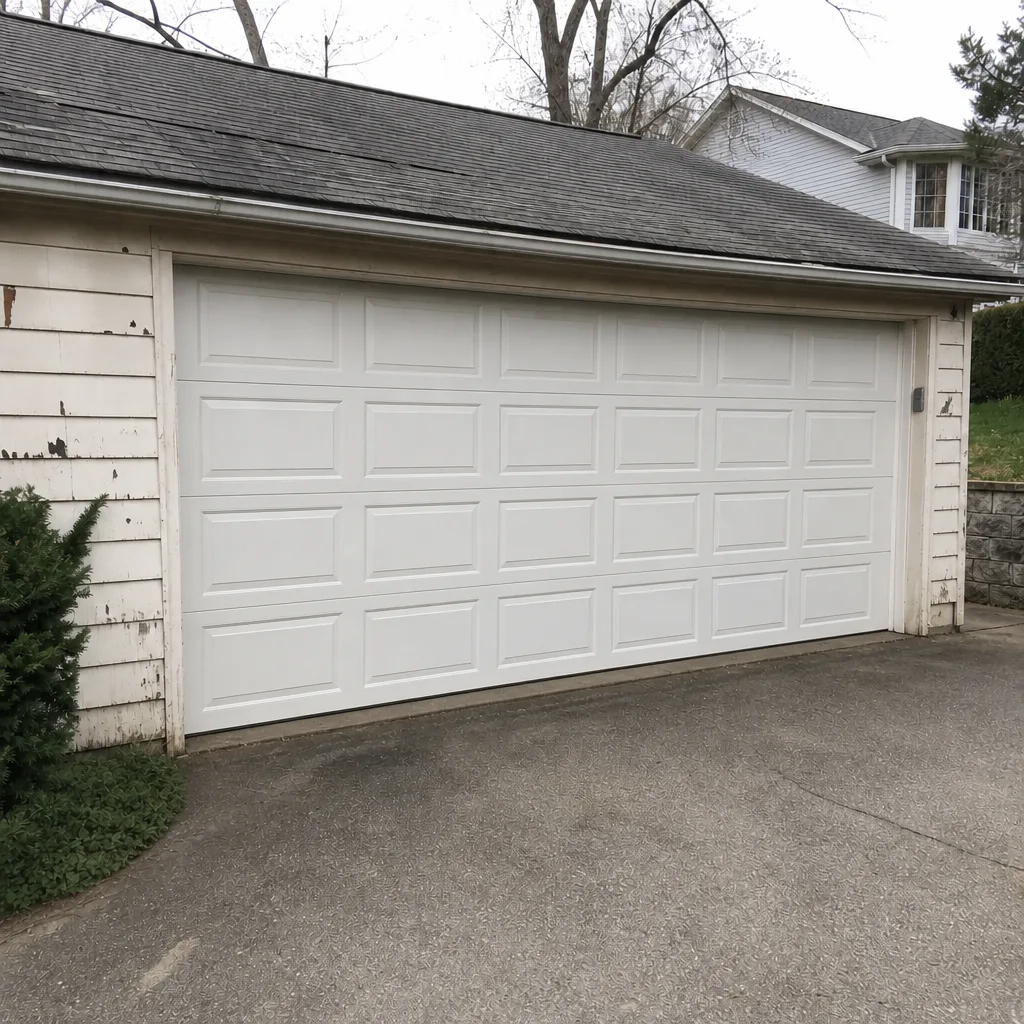 After
When to Call a Professional
Some jobs are clearly beyond a homeowner’s toolkit. Call a professional when a spring breaks, when a cable snaps, when the door comes off its track, or when it won’t open or close at all. Call when the door feels heavy or slams down, when the opener runs but the door doesn’t move, or when you see visible damage to panels, hinges, or the bottom edge that you can’t safely diagnose yourself. Call if the door is making new noises you can’t place, or if a safety test fails and won’t reset. And call if you’re simply not sure what’s wrong. Garage Door Repair Stamford Pros offers free estimates in Stamford. Call (855) 658-4183. We answer 24/7, and fast dispatch from 7am to 7pm gets a technician to you for the jobs that can’t wait.
Frequently Asked Questions
A new garage door in Stamford typically runs from around $1,200 for a basic uninsulated steel door up to $4,500 or more for a premium insulated or carriage-style door, with installation included in most quotes. The final price depends on door size, material, insulation level, and any opener work. A free measure and written estimate is the only way to pin down your number, and that written estimate sets the price.
Yes, spring repair is often handled the same day when you call during dispatch hours. Springs are commonly kept on hand for common door sizes, and a trained technician can assess and replace them quickly. Because springs are the highest-risk part of the system, don’t run the opener on a broken spring. Call (855) 658-4183. We answer 24/7. Fast dispatch from 7am to 7pm, Sunday through Friday.
The written estimate sets the price, and we quote and agree on it before any work starts. If we find something additional while on site, we explain it and get your approval before touching it. You won’t get a surprise invoice for work you didn’t agree to.
The local pro is licensed and insured as their state requires, and you should ask any company you hire for those credentials before work begins. Garage door work involves high-tension springs, electrical openers, and heavy moving parts, so proper licensing and insurance protect you as the homeowner.
Permit requirements vary, so check with the City of Stamford’s building department before you order a new door. Some replacements need a permit and inspection, and some don’t, depending on the scope and the property. A reputable installer will know the local process and can point you in the right direction.
Insulated steel in a heavier gauge with a factory finish is the best all-around choice for a humid climate like Stamford’s. It resists moisture, insulates well, and holds up to constant use. Fiberglass and wood composite are good alternates where rust resistance or a wood look matters more, but each has tradeoffs in insulation or upkeep.
Yes. Emergency garage door service is a real offering, not a marketing phrase. A stuck-open door is a security problem, and a door off its track is a safety hazard. Call (855) 658-4183. We answer 24/7, and fast dispatch from 7am to 7pm covers the situations that can’t wait until morning. For a full overview of repair options, see our Garage Door Repair Stamford Pros page.
The Bottom Line
Garage doors in Stamford live in a climate that punishes shortcuts. Moisture rusts the steel, freeze-thaw cycles work the seals and hardware, and attached garages make insulation a comfort issue rather than an afterthought. Choose materials for moisture resistance and gauge, check your HOA rules before you order, insulate an attached garage properly, and keep the moving parts clean and lubricated. Springs are the one repair to leave to a specialist, and a door that’s hard to lift is telling you something is off. We work on your brand, whether it’s LiftMaster, Chamberlain, Genie, Clopay, or another major name. When your garage door stops, your day stops, and we get that. Call (855) 658-4183 for a free estimate. We answer 24/7. Fast dispatch from 7am to 7pm, Sunday through Friday.
Written by the team at Garage Door Repair Stamford Pros.