
Last updated November 20, 2026
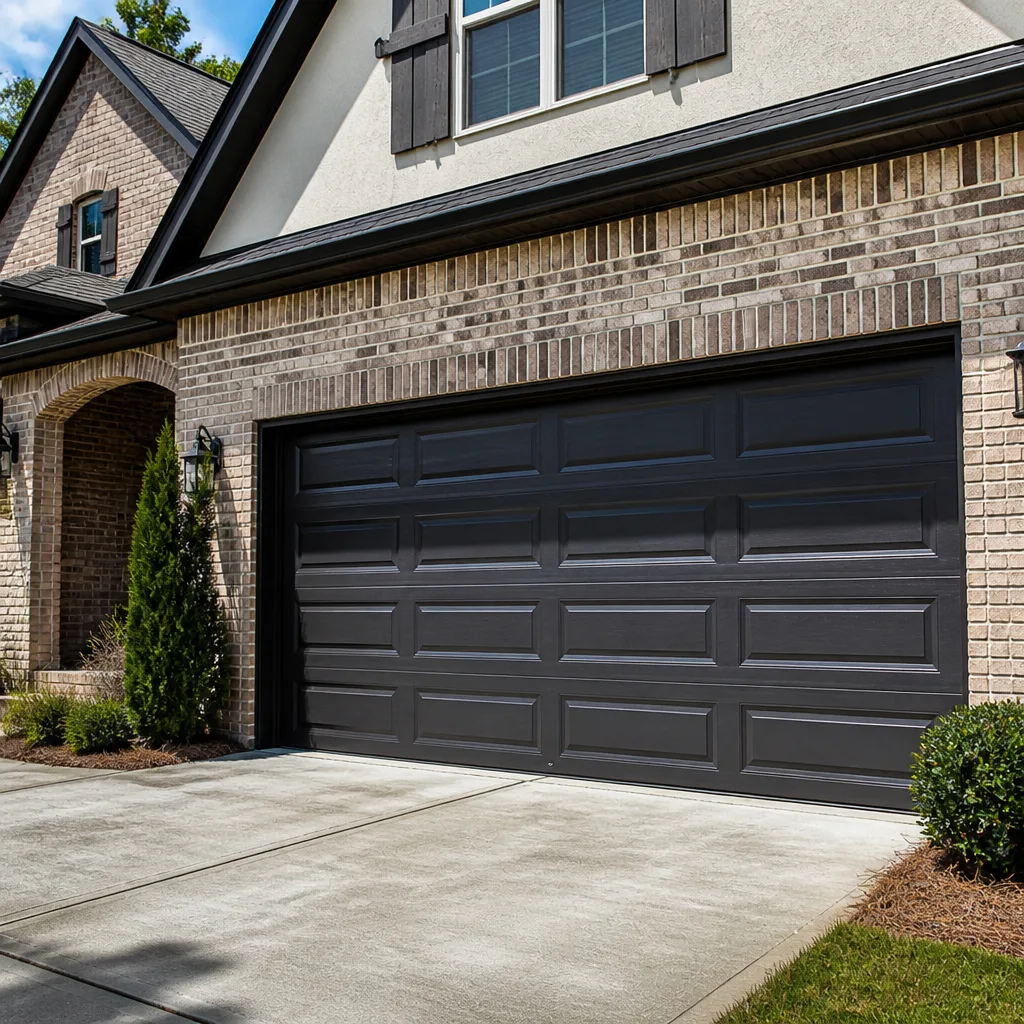 Raised-panel steel
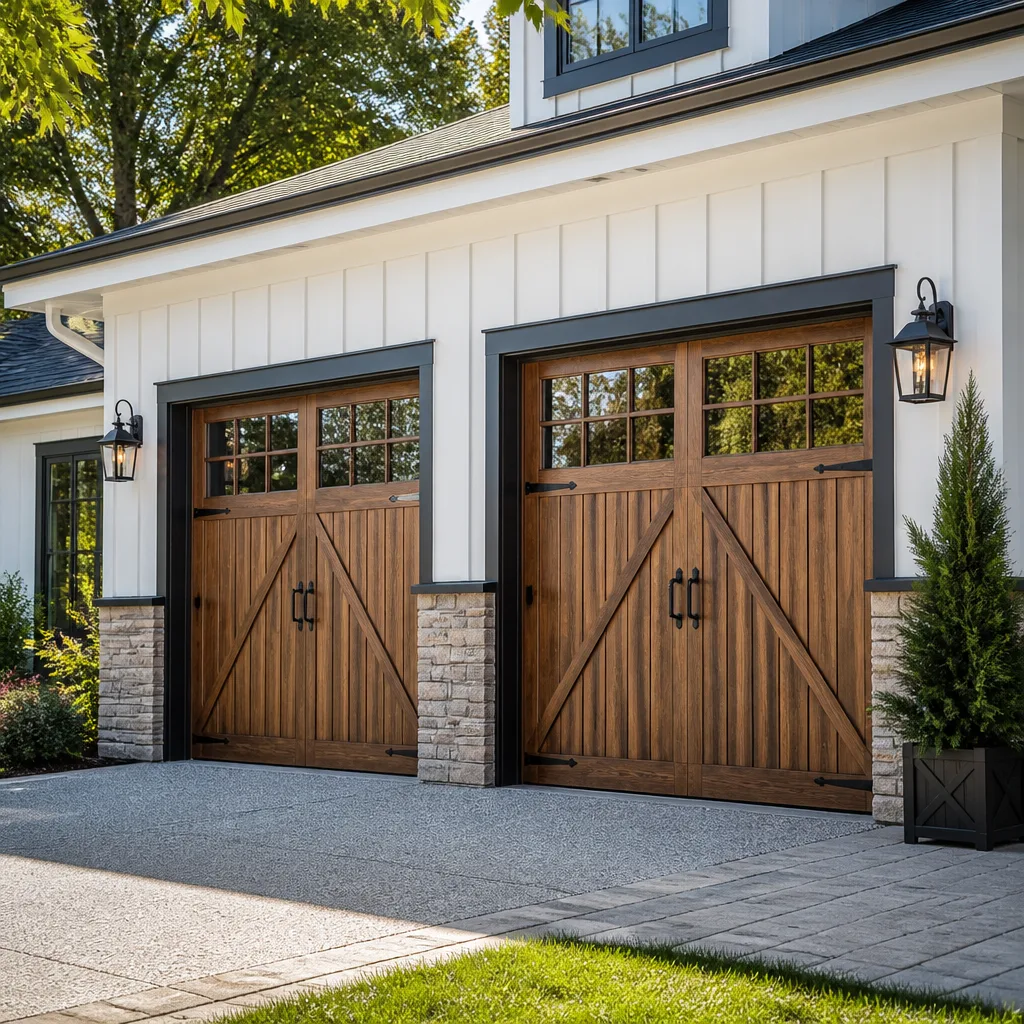 Carriage house
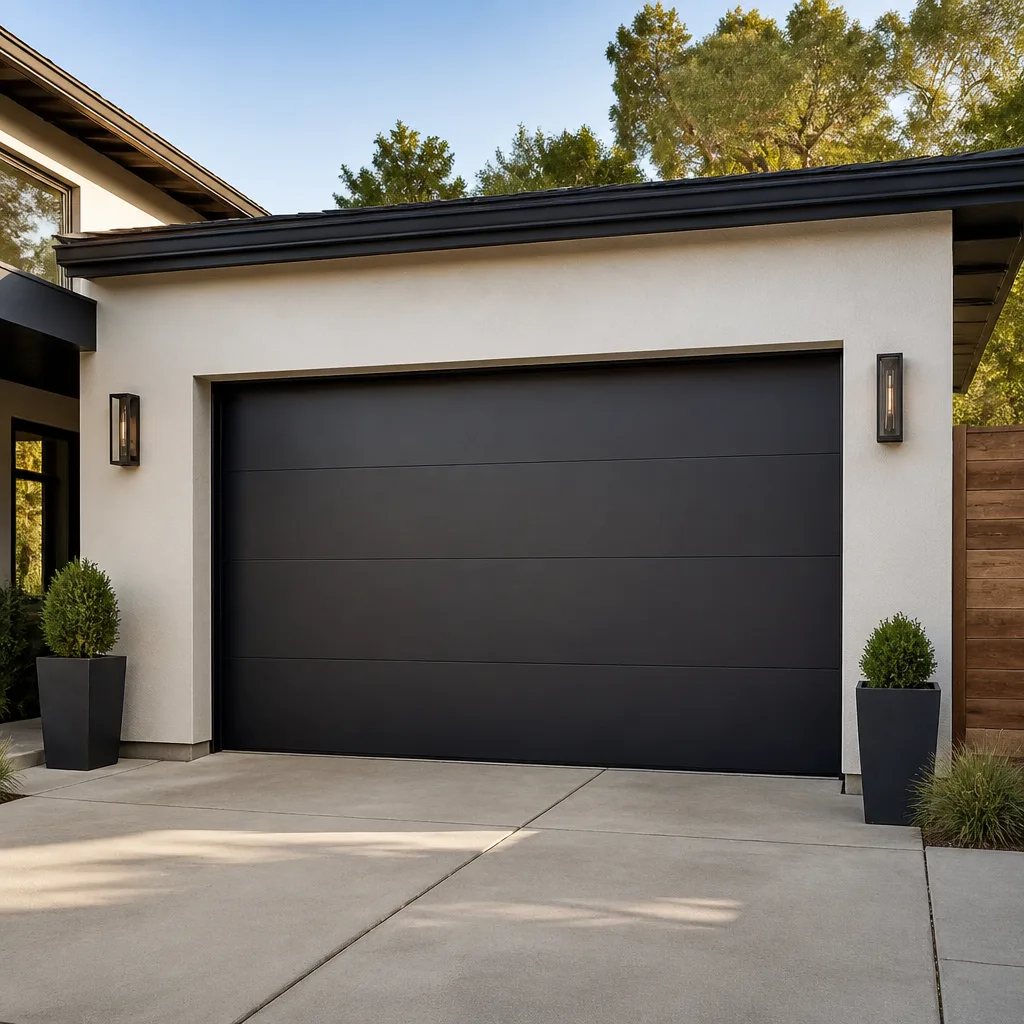 Modern flush
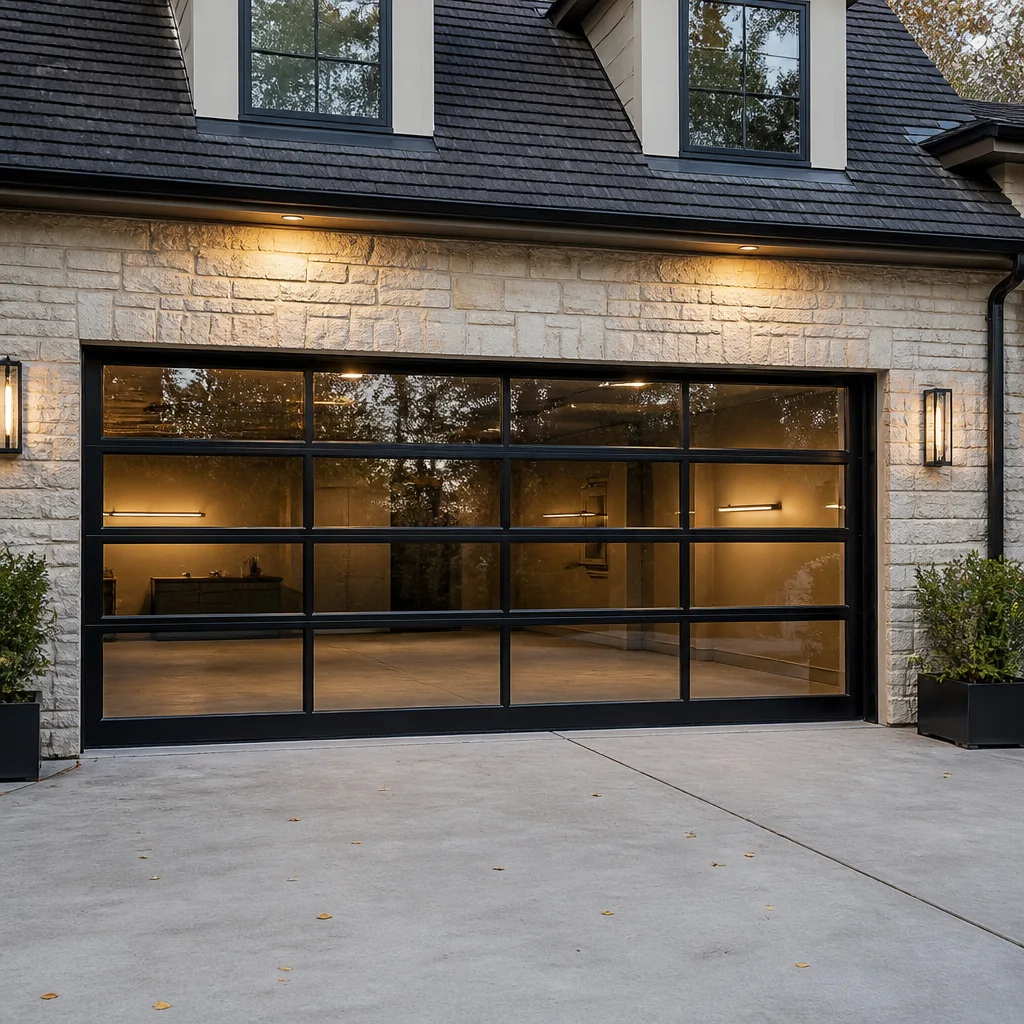 Full-view glass
 LiftMaster openers
 Chamberlain openers
Full 25-point door and opener safety check with every visit - springs, cables, rollers, tracks, and your LiftMaster or Chamberlain opener included
You get a price before we start. It does not change when the pro arrives.
Get your free estimateGarage Door Cost Breakdown: The Stamford Homeowner’s Reference for 2026
Most garage door quotes in this market don’t disagree about the work. They disagree about what they’re counting. One quote bundles the old door into the price and hauls it away; another leaves the pickup to you. One includes a new bottom seal and weatherstrip; another bills them as line items after the fact. One prices a matched pair of springs; another prices one spring and lets you discover the second on your own. That’s how the same job lands at wildly different totals, and none of it is dishonest. It’s just invisible. This Stamford guide pulls every cost component apart so you can line up two quotes and see what’s actually in each one, what drives the number up, and where a cheap quote gets expensive later.
Quick Answer
A typical garage door repair in Stamford in 2026 runs roughly $150 to $500 for common fixes like springs, cables, rollers and openers, while a full door replacement usually lands between $1,200 and $4,500 depending on material, insulation and size. Most of the gap between a low quote and a high one isn’t labor rate. It’s what each quote includes: haul-away, hardware, seals, opener compatibility and permit costs, which get folded in by some contractors and left out by others. The written estimate should name every one of those items before you compare totals.
Styles & brands we work with
- Raised-panel steel
- Carriage house
- Modern flush
- Full-view glass
- LiftMaster openers
- Chamberlain openers
Table of Contents
- Why Two Quotes for the Same Door Land So Far Apart
- Component-by-Component Repair Costs in Stamford
- Labor Rates and What Emergency Pricing Should Look Like
- Hidden Costs Homeowners Consistently Miss
- How Material and Insulation Change 10-Year Cost of Ownership
- Full Door Replacement: Low, Mid and High Tiers
- What Pushes a Stamford Project Toward the Higher End
- How to Compare Two Quotes Line by Line
Why Two Quotes for the Same Door Land So Far Apart
The number at the bottom of a garage door quote is a total of decisions, not a price for a door. When two contractors quote the same job and one comes in substantially lower, the difference almost always sits in one of four categories.
What’s bundled and what isn’t. Disposal is the clearest example. Hauling an old sectional door to a transfer station costs money, and some contractors build that into their quote while others leave it to the homeowner. Same with the old track, the torsion tube, and the opener if it’s being replaced at the same time.
One spring or a matched pair. A torsion system holds two springs. They wear at the same rate, so replacing one and leaving the other is short-term thinking at best. A quote that prices a single spring isn’t wrong, but it’s a different job than one that prices a pair, and the totals won’t be close.
Hardware replacement versus reuse. Rollers, hinges, and bearing plates wear out. Some quotes replace them as a matter of course because the door will be quieter and last longer; others reuse what’s on the door. Neither is a scam. They’re different scopes.
Opener compatibility. If you’re buying a new door with a built-in opener, the existing opener may not be compatible with the new panels or the new safety sensors. A quote that accounts for that in advance is more accurate than one that doesn’t.
In our experience, most of the friction in this market comes from quotes that are honest but not comparable. The fix isn’t a cheaper quote. It’s a quote that names its components.
Component-by-Component Repair Costs in Stamford
Here’s how the individual pieces usually price out for a single-family home in the Stamford area in 2026. These are typical ranges for common residential doors, and the written estimate always sets the final price. Two things to keep in mind before you read the table. First, a torsion spring price is for one spring; a matched pair is usually replaced together, so a pair costs about twice the single-spring figure. Second, labor for a repair is often quoted per job rather than per hour, so the ranges below fold labor into the number.
| Repair | Typical 2026 range | Notes |
|---|---|---|
| Torsion spring (one) | $180 to $340 | Pair usually replaced together, so roughly double |
| Extension spring (one) | $150 to $290 | Older doors; check for matched-pair pricing |
| Lift cables (each) | $90 to $180 | Always replaced in pairs on a torsion system |
| Rollers (set) | $120 to $240 | Nylon rollers quieter than steel |
| Hinges and bearing plates | $100 to $260 | Often bundled with a tune-up |
| Opener repair (common faults) | $150 to $400 | Board, gear, or sensor issues |
| Opener replacement (belt or chain) | $350 to $850 | Depends on drive type and smart features |
| Single panel replacement | $250 to $700 | Older or discontinued doors run higher |
| Bottom seal and weatherstrip | $90 to $220 | Often missed on cheap quotes |
| Track straightening or replacement | $150 to $450 | Per section or full track set |
If your door needs work on more than one of these, ask for a written quote that itemizes each line rather than a single lump total. It’s the only way to compare two contractors fairly, and it’s how you spot a quote that’s quietly skipping something.
The other reason to get this itemized: spring and cable work is genuinely dangerous. A torsion spring is under heavy tension, and the tools and technique needed are not the same as what a general handyman brings to a job. That’s why garage door spring repair is best treated as its own task, quoted on its own, done by someone who does it every week.
Labor Rates and What Emergency Pricing Should Look Like
Labor for garage door work in the Stamford area generally lands in the $75 to $140 per hour range for residential contractors, but most jobs aren’t billed hourly. They’re billed as a flat price per repair. That flat pricing is good for you: it caps your exposure if a job runs long. It also means the honest way to compare contractors is on scope, not on hourly rate, because a contractor with a lower rate who bills three hours won’t necessarily cost less than one with a higher rate who bills a flat price.
A few things a legitimate quote does:
- Names the repair. “Spring replacement” or “cable replacement” rather than “door service.”
- Shows what’s included. Hardware, seals, testing, and balance check should appear in writing.
- States the total. A single agreed price before any work starts, not a range that moves on arrival.
- Says what’s extra. If a spring seat, bearing plate or roller replacement is only sometimes needed, the quote should say so in advance.
What legitimate pricing doesn’t do is invent a premium for the day or the hour. Emergency and same-day work is priced the same way as any other work in this trade: per job, by written estimate, agreed before anyone starts. A contractor who quotes a number, arrives, and then tells you the job is a different job because it’s a Sunday, or because the spring is a different spring, owes you a clear written explanation. In our experience, a written quote given before the visit and honored on the visit is the single strongest signal of a straight operation.
If your door has stopped working and you need to know what happens next, garage door repair covers the typical callouts and the order we work through them.
Hidden Costs Homeowners Consistently Miss
The gap between a cheap quote and a finished job usually comes from five line items that a low quote leaves out, not from a bait-and-switch. None of these are surprising once you know they exist. All of them should appear on a written estimate.
1. Haul-away and disposal
An old sectional door, the track, and the opener have to leave your property, and that costs money to do properly. Some contractors include it; some don’t. Ask which it is, and get the answer on paper. If it’s not included, you’ll be handling it yourself, which is more than a trip to the curb for a two-car door.
2. Permit costs
Permit requirements for garage door replacement or structural track changes vary by town and by scope, and some jobs need one while others don’t. Ask your city’s building department what your specific project requires before signing anything; don’t guess, and don’t rely on what a neighbor told you. If a permit is required, the fee is a real cost and should be on the quote.
3. Opener compatibility upgrades
If you’re installing a new door and keeping the opener, the new door’s weight and panel design may or may not work well with the existing unit. Older openers sometimes don’t have the safety sensor placement or the lifting capacity the new door needs. That upgrade isn’t optional if it’s required, and a quote that doesn’t mention it isn’t finished.
4. New hardware with a new door
New doors are frequently quoted with new springs, cables, rollers and hinges, because reusing old hardware on a new door is a false economy. If a quote reuses hardware, it should say so. If it replaces it, that should be listed.
5. Finishing and trim
Replacing a door sometimes means the trim around it needs attention, particularly on older homes. If a quote includes trim repair, you know. If it doesn’t, you’ll find out later.
The pattern is consistent: an itemized quote tells you what you’re buying, and a lump-sum quote tells you what you’re paying. On a job of this size in Stamford, you want the itemized version.
How Material and Insulation Change 10-Year Cost of Ownership
Upfront price is the easiest number to compare and the least useful one over a decade. A steel door at the low end and an insulated steel door at the top of the range can look like a $1,200 difference on paper. Over ten years, that difference can pay for itself in energy and comfort, or it can be wasted on features you didn’t need. Here’s how the materials actually behave.
Steel
Steel is the default for most residential doors in Connecticut: it’s cost-effective, available in many panel styles, and holds paint well. It’s also the material most affected by seasonal temperature swings, which can cause dents to telegraph and paint to blister over time if the surface is damaged. A non-insulated steel door is the cheapest option upfront and the least comfortable if you use your garage as workspace or parking.
Wood
Wood looks the best on the right house and asks for the most maintenance. It needs refinishing periodically, and in a climate with a real winter, the moisture cycling is what drives that schedule. Wood doors sit at the top of the price range for a reason. If you want the look and can commit to the upkeep, it holds up; if not, the ten-year cost of ownership climbs fast.
Aluminum
Aluminum is light and won’t rust, which makes it a sound choice for full-glass and contemporary styles. It’s less rigid than steel, so panel size and frame construction matter more than on a traditional door. It sits in the middle of the price range for most residential projects.
Fiberglass
Fiberglass resists dents and holds up well against moisture, which makes it a reasonable pick for a harder-wearing door. The finish options are narrower than steel or wood, and it isn’t the cheapest per square foot. It’s a solid middle-tier option with a low maintenance load.
Insulation
Insulation level changes both the upfront price and the ten-year cost of ownership. An insulated door keeps a garage warmer in winter, which matters if your garage shares a wall with living space, if you have a room over it, or if you use it as a workshop. The insulation level is quoted separately from the door material, and it’s usually one of the biggest drivers of the price gap between two doors that look identical from the street.
If you’re choosing between materials and want a straight answer on which one fits your house, the fastest route is to ask a contractor who installs all of them. Our garage door repair Stamford Pros hub is the place to start when you’re still deciding what you need.
Full Door Replacement: Low, Mid and High Tiers
Full replacement is a different budget category from repair, and the spread is wide because the door itself is the cost. Here’s how the tiers typically fall for a Stamford-area single-family home in 2026. These ranges assume a standard two-car opening and a straight swap; odd sizes, custom glass, and complicated trim push the total up.
| Tier | Typical range | What you usually get |
|---|---|---|
| Low | $1,200 to $2,000 | Non-insulated or lightly insulated steel, standard panel style, new springs and hardware, existing opener retained if compatible |
| Mid | $2,000 to $3,200 | Insulated steel or fiberglass, more panel and window options, new hardware throughout, upgraded seals |
| High | $3,200 to $4,500 and up | Insulated steel with premium finish, aluminum-and-glass contemporary styles, wood, or oversized and custom openings |
Two things move a project between tiers. The first is size: an oversized door or a nonstandard opening adds material and labor. The second is what’s behind the door: if the framing is old or out of square, more time goes into fitting the new door than the quote may have priced in. On a Stamford home older than the door you’re replacing, that’s the factor most likely to push a project toward the higher end, and it’s the one that’s easiest to miss when comparing quotes from contractors who haven’t seen the opening.
When you’re ready for a quote, ask for a free measure and a written price rather than a same-day figure over the phone. A number given without seeing the opening isn’t a quote; it’s a guess.
What Pushes a Stamford Project Toward the Higher End
Stamford is a mix of housing stock, and the age of the house does more to move the price than the neighborhood does. Here are the specific factors we see most often on this side of Fairfield County.
Older home framing
A lot of Stamford homes predate the door that’s on them. Framing that’s out of square, a header that’s settled, or a rough opening that’s been patched more than once will all add time to an install. A contractor who measures carefully before quoting accounts for it. One who quotes over the phone doesn’t, and the difference shows up in the invoice.
New England freeze-thaw cycling
This is a climate with real winters and real temperature swings. Metal expands and contracts with the seasons, wood takes on and sheds moisture, and the seals and weatherstripping that keep the door tight take the worst of it. That’s why bottom seals and weatherstrip matter more here than in a mild climate, and why a quote that includes them is more accurate than one that doesn’t.
Heated and attached garages
An attached garage under living space, or one that’s finished and heated, changes the insulation question. It’s not about comfort at that point; it’s about the door being the weakest thermal boundary in the house. Insulation level is a bigger decision in that situation, and it pushes the project up a tier.
Driveway and clearance
Steeply pitched driveways and low headroom above the opening constrain which doors and openers fit. Low headroom in particular may require a different torsion setup or opener mount, and that adds cost. It’s an easy thing to miss on an initial visit and an expensive thing to discover after the door is ordered.
None of these are reasons to expect a higher price. They’re the specific things a Stamford quote should already be accounting for, and reasons to ask about them before you sign.
How to Compare Two Quotes Line by Line
Two quotes on the same job aren’t comparable unless they cover the same items. Here’s the sequence to work through them fairly, in order.
- Match scope first, price second. Put both quotes side by side and compare what’s included before you compare the totals. If one includes haul-away and one doesn’t, the lower one isn’t actually lower.
- Count the springs. A quote for one spring isn’t the same job as a quote for a matched pair. Make sure both quotes price the same number.
- Check hardware. Rollers, hinges, and bearing plates should be listed if they’re being replaced. If they’re not listed, ask.
- Look for seals and weatherstrip. Bottom seal and perimeter weatherstrip are commonly silently omitted. If they’re not in the quote, they’re an add-on.
- Confirm opener compatibility. If you’re keeping the opener, either quote should state whether it will work with the new door.
- Ask about permits. Your town’s building department decides whether a permit is required. If the job needs one, the quote should carry the fee.
- Confirm the written total. The final price is the one on the written estimate, agreed before work starts. If a quote doesn’t have a total, it isn’t finished.
The one direct comparison that always works is a written estimate with a total price. Anything else is a conversation, and conversations don’t count when the invoice arrives. If any of this feels like guesswork, our garage door opener repair page covers how openers fit into the picture when you’re replacing a door.
Common Mistakes to Avoid
- Comparing totals instead of scopes. A lower total that leaves out haul-away, seals, and hardware isn’t cheaper; it’s a shorter quote. Match the scope before you compare the price.
- Accepting a phone quote as a real quote. An accurate number for a replacement needs a measurement. A number given without seeing the opening isn’t a quote.
- Replacing one spring on a torsion system. The pair wears together. Replacing one leaves you with a second spring already past its service life, and a second repair bill sooner than you’d expect.
- Reusing old hardware with a new door. New springs, cables, and rollers are usually a small fraction of the total and the difference between a door that lasts and one that doesn’t.
- Forgetting the opener when you change the door. Older openers may not be compatible with a new panel weight or sensor layout. It shouldn’t be an afterthought.
- Skipping the permit check. Ask your city’s building department directly. Requirements vary by scope, and the answer is free.
- Choosing a contractor who doesn’t specialize in doors. A general handyman can hang a door, but springs, cables, and opener boards are a different skill set. A garage door specialist carries the right tools and has done the job often enough to know what a worn spring feels like before it fails.
See the difference
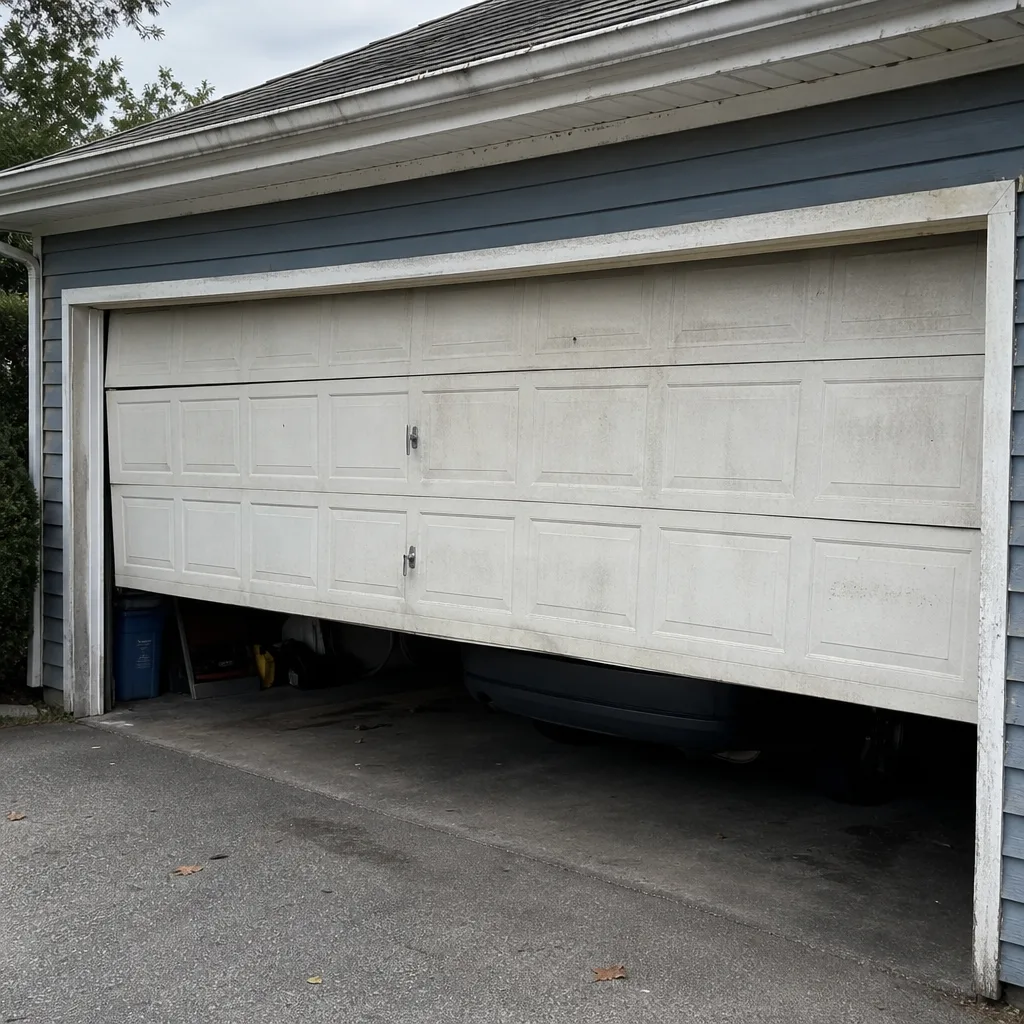 Before
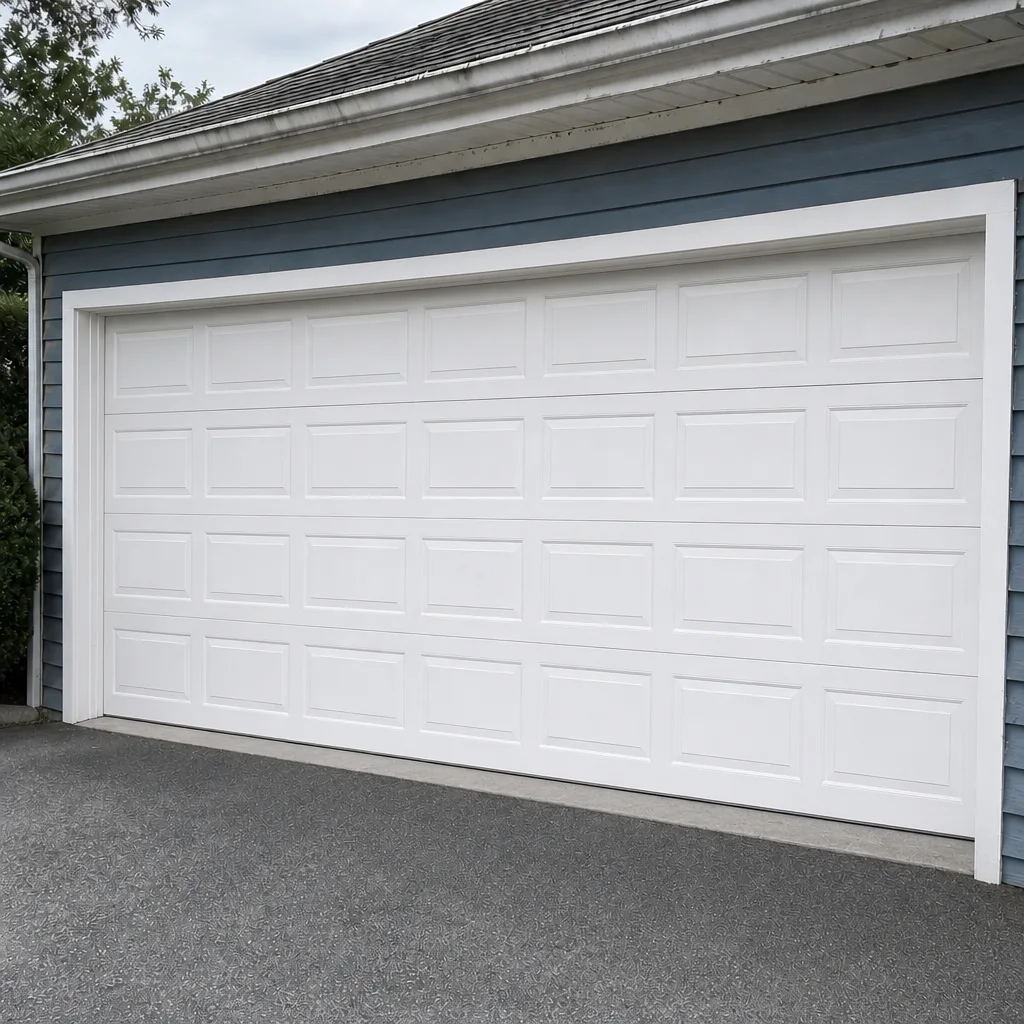 After
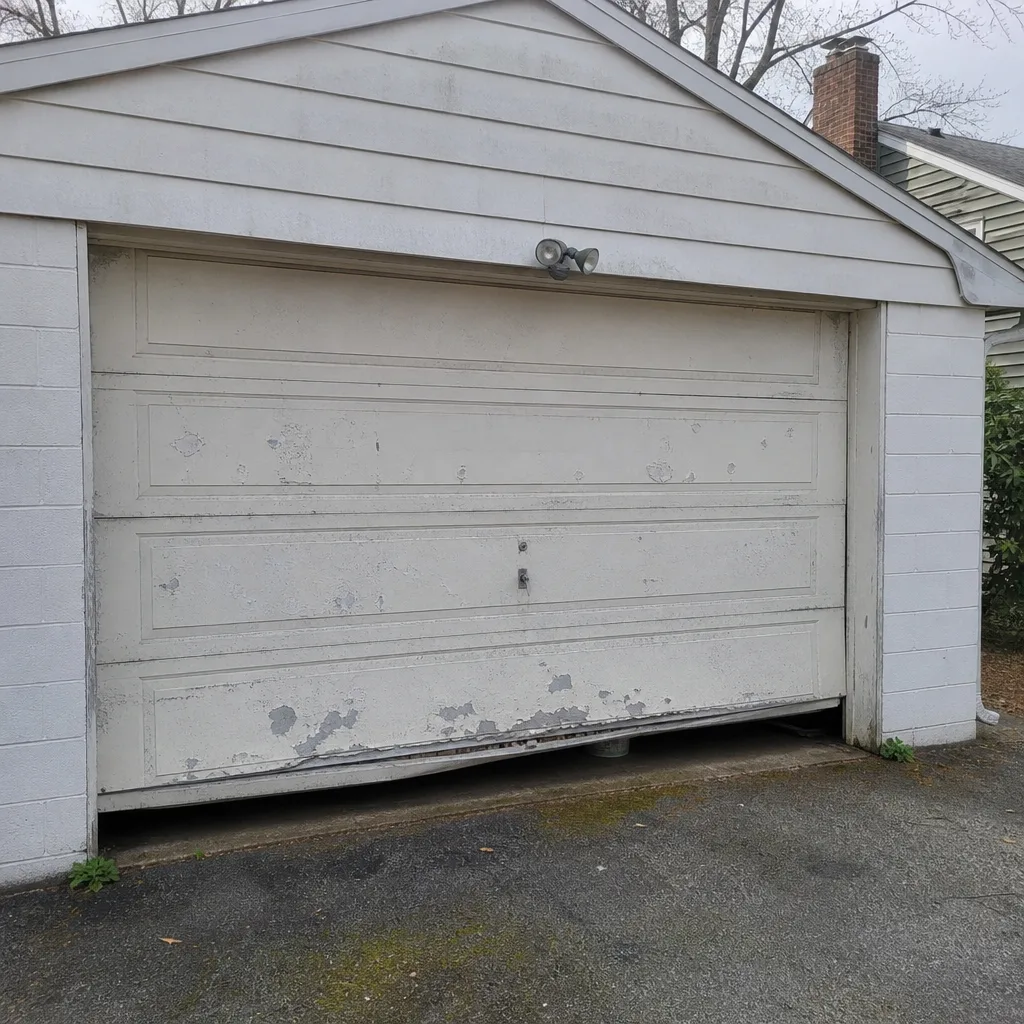 Before
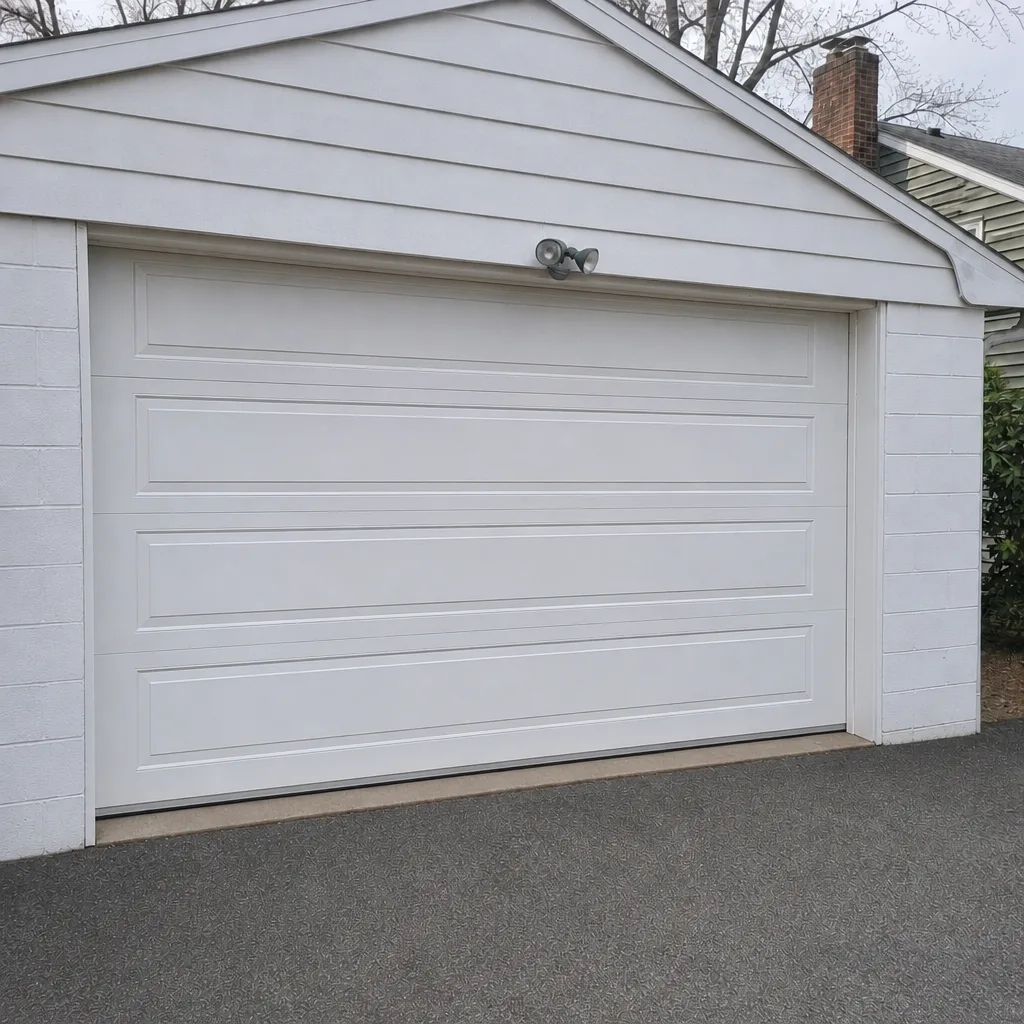 After
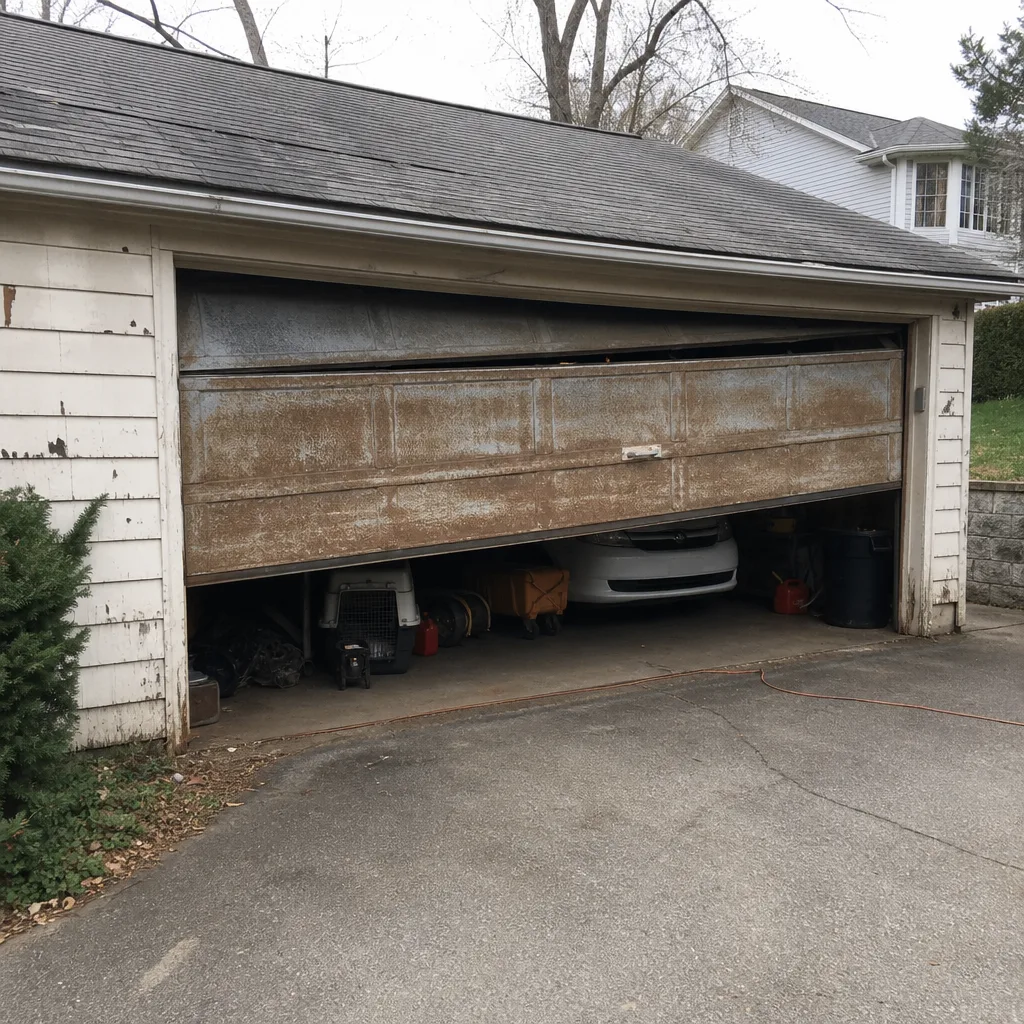 Before
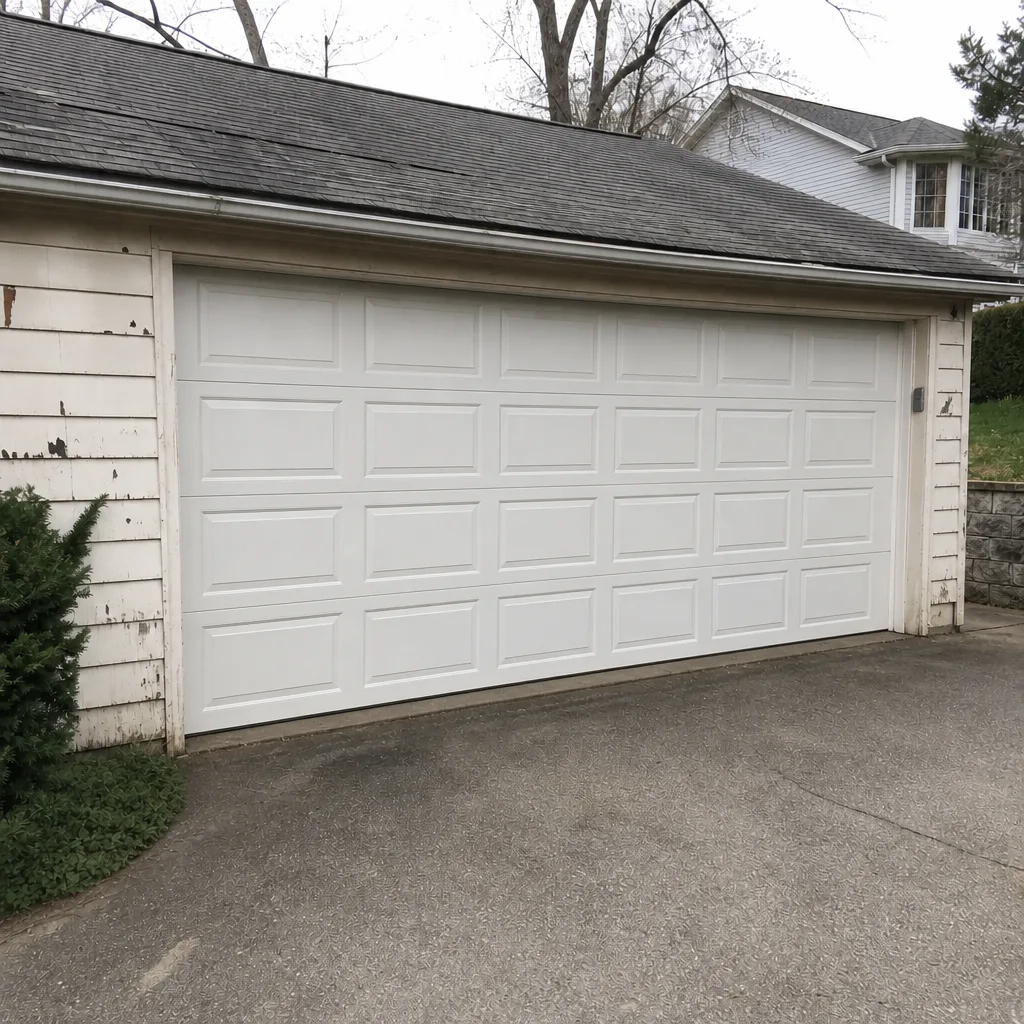 After
When to Call a Professional
Some things can wait. A noisy roller or a scraping track that still opens is worth a call, but it isn’t an emergency. The situations below are. A door that won’t close is a security gap, and it’s the one most homeowners underestimate: an open door is an open house. A spring or cable that has snapped leaves the door too heavy to lift safely by hand. A door that’s come off its track can drop, and it’s a hazard to anyone standing near it. An opener that runs but won’t lift the door is usually a symptom of a failing spring or a stripped gear, either of which is a professional repair.
Springs and cables are the highest-tension parts of the system, and they deserve a trained technician with the right tools. If you’re anywhere in Stamford and it can’t wait, Garage Door Repair Stamford Pros offers free estimates in Stamford. Call (855) 658-4183. We answer 24/7, and fast dispatch runs from 7am to 7pm, Sunday through Friday.
Frequently Asked Questions
Most residential garage door repairs in Stamford in 2026 fall between $150 and $500, with spring replacement at roughly $180 to $340 per spring and a full door replacement at $1,200 to $4,500 depending on material, insulation and size. The written estimate sets the final price, so ask for an itemized quote rather than a lump total. Call (855) 658-4183 for an exact quote; estimates are free.
The higher quote usually includes items the lower one left out: haul-away, new hardware, bottom seals, opener compatibility upgrades, or a matched pair of springs instead of one. Neither quote is necessarily dishonest; they’re just different scopes. Compare the items before you compare the totals. Call (855) 658-4183 and we’ll walk through a written itemization with you.
No. In this market, a repair is priced per job by written estimate, whether it’s an emergency or a scheduled visit, and the price is agreed before any work starts. The estimate tells you the number; it shouldn’t change because of the day or the hour. Call (855) 658-4183. We answer 24/7, with fast dispatch from 7am to 7pm, Sunday through Friday.
It shouldn’t. A written quote is agreed before work begins, and the final price is the one on that quote. If a repair turns out to need something the quote didn’t cover, a straight contractor tells you what’s changed and what it costs before continuing, not after. Call (855) 658-4183 to get a written price first.
The local pro we connect you with is licensed and insured as the state of Connecticut requires. Our technicians have up to 10 years of experience, and we’re familiar with the major door and opener brands, including Raynor and LiftMaster. Call (855) 658-4183 to discuss the work and get a free estimate.
Ask directly, and get the answer in the written quote. Haul-away is one of the most commonly omitted items, and it’s a real cost on a sectional door. If the quote doesn’t say, it usually isn’t included. Call (855) 658-4183 and we’ll confirm what’s covered before you commit.
The Bottom Line
The number on a garage door quote is a bundle of decisions, and the decisions matter more than the total. Springs are priced each, not as a pair. Disposal, seals, hardware, and permits are in or out, and that’s where the widest gaps come from. Material and insulation change upfront cost and ten-year cost together. In Stamford, older framing and a real winter push more projects up a tier than the neighborhood does. Compare two quotes by scope before you compare price, insist on a written estimate with a total, and ask your town’s building department about permits before you sign. That’s how you get a price you can trust.
If you’d like a free estimate from a team that works on garage doors and only garage doors, call Garage Door Repair Stamford Pros at (855) 658-4183. We answer 24/7, with fast dispatch from 7am to 7pm, Sunday through Friday. We’re familiar with the major brands, from Raynor to Chamberlain, and we’ll give you a written price before any work starts.
Written by the team at Garage Door Repair Stamford Pros.