
Last updated November 20, 2026
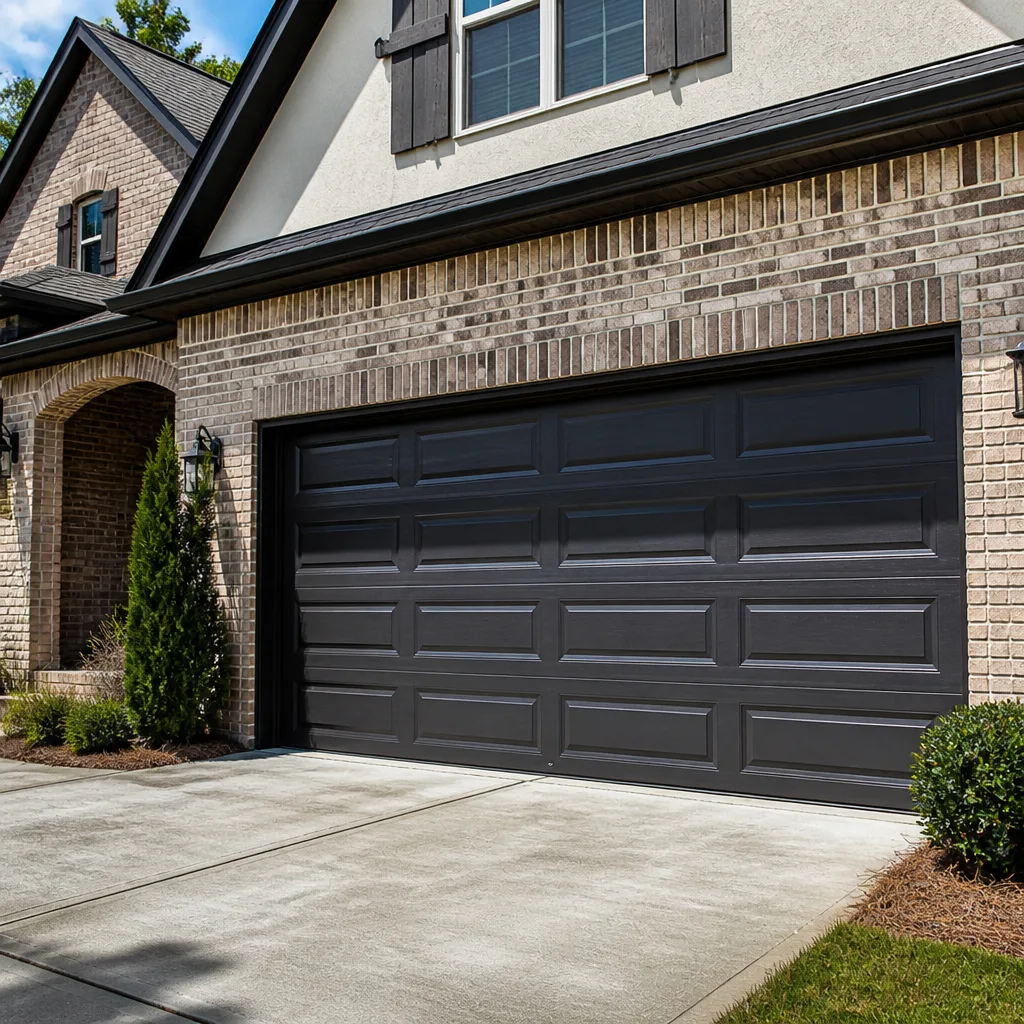 Raised-panel steel
 Carriage house
 Modern flush
 Full-view glass
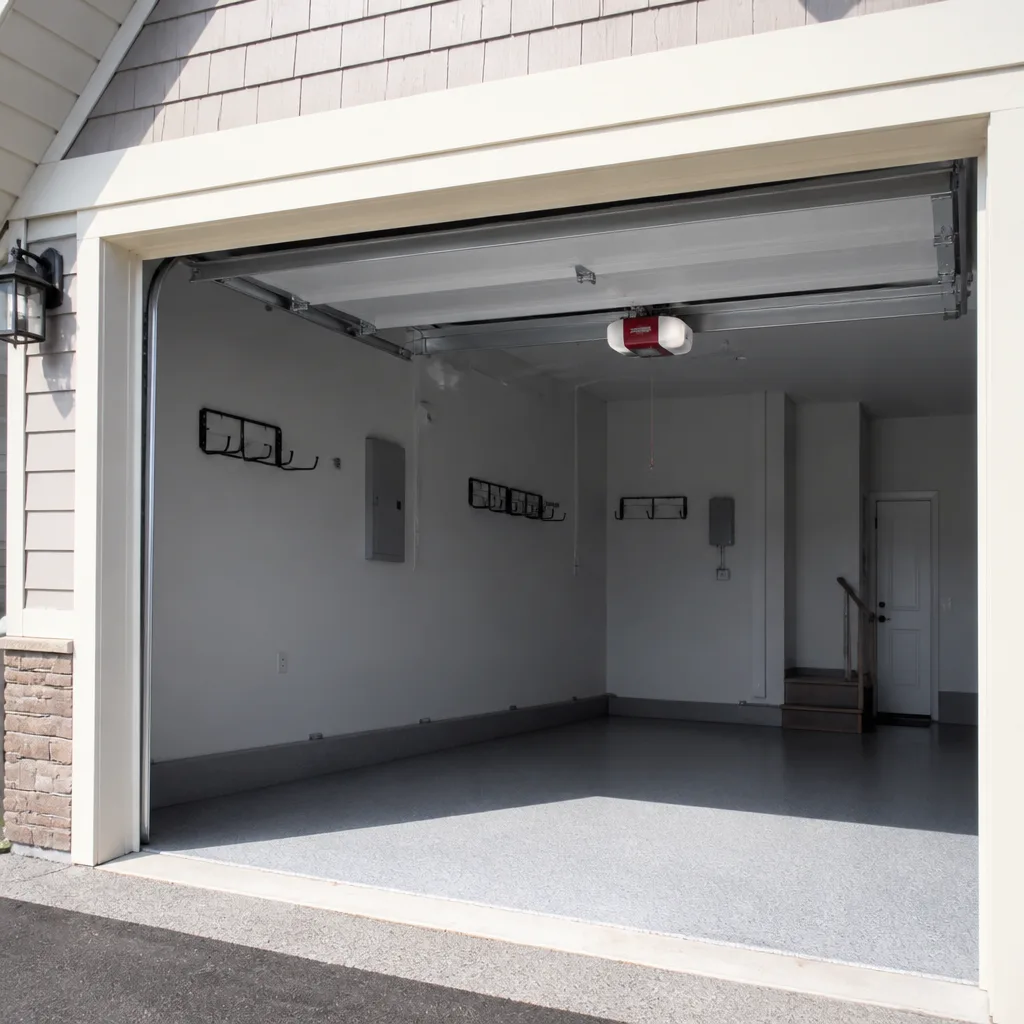 LiftMaster openers
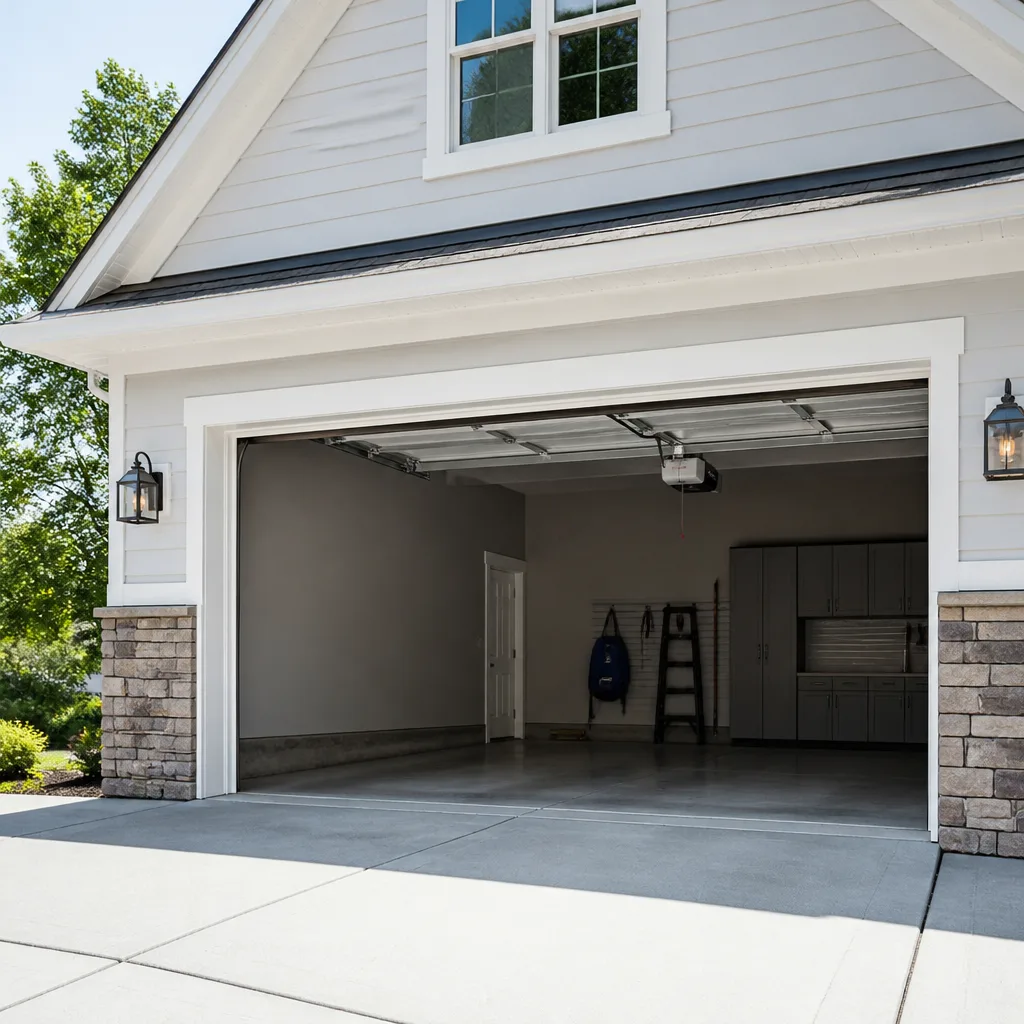 Chamberlain openers
Full 25-point door and opener safety check with every visit - springs, cables, rollers, tracks, and your LiftMaster or Chamberlain opener included
You get a price before we start. It does not change when the pro arrives.
Get your free estimateDIY vs Professional Garage Door: The Stamford Homeowner’s Decision Guide
Most homeowners think the DIY-versus-professional question comes down to skill. Can I handle this myself, or do I need to pay someone? That framing is wrong, and it’s the reason people get hurt. The real question is which specific task you’re facing, because a garage door is a set of parts that range from completely harmless to genuinely dangerous. Swapping a bottom seal and reprogramming a keypad are things any handy homeowner can finish in an afternoon. Touching a torsion spring is a different category of task entirely, and no amount of confidence changes that. This guide draws the line task by task, explains the physics behind it, and covers what Connecticut contractor law means for your project in Stamford.
Quick Answer
Safe DIY garage door tasks are limited to the low-tension parts: bottom seals, weatherstripping, keypad and remote programming, lubrication, and visual inspections of rollers, hinges, and tracks. Everything involving torsion springs, extension springs, cables, and the counterweight system belongs to a trained technician, full stop. Opener replacement sits in the middle: legal for a homeowner to attempt in Connecticut, but easy to get wrong in ways that void the warranty and shorten the opener’s life.
Styles & brands we work with
- Raised-panel steel
- Carriage house
- Modern flush
- Full-view glass
- LiftMaster openers
- Chamberlain openers
Table of Contents
- The Physics of Torsion Springs, Explained Plainly
- Task-by-Task Breakdown: Safe DIY, Caution, Professional-Only
- How to Do the Safe DIY Tasks Correctly
- DIY Opener Installation vs. Professional: The Real Cost
- Connecticut HIC Law: What You Can and Can’t Do Yourself
- How Stamford’s Climate Affects Your Door and Your Repair Choices
- Common Mistakes to Avoid
- When to Call a Professional
The Physics of Torsion Springs, Explained Plainly
A torsion spring is a tightly wound coil of steel that stores energy every time you close your garage door. When the door goes down, the spring winds up. That stored energy is what makes a 150-pound door feel light enough to lift with one hand. It’s also what makes spring work dangerous in a way that no other garage door part is.
Here’s the part most homeowners don’t picture. A torsion spring under tension holds roughly the same stored energy as the door’s full weight, transferred into a coil about the size of your forearm. If that tension releases suddenly, through a snapped spring, a slipped winding bar, or a cable that gives way under load, the energy doesn’t dissipate slowly. It releases in a fraction of a second. That’s not a scare tactic or a liability hedge. It’s just what a wound spring does when it lets go.
Extension springs, the older style mounted along the horizontal tracks, carry the same risk in a different form. They stretch under load and can fail violently, which is why containment cables are standard on modern installs. Cables themselves run at high tension on both styles. None of these components are meant to be worked on by anyone without the right winding bars, the right technique, and the habit of securing the door before touching anything.
In Stamford, we see the same pattern every winter: a cold snap hits, and springs that have been slowly fatiguing for months finally give. Steel gets more brittle as temperatures drop, and a garage that swings between a heated house on one side and freezing air on the other puts real thermal stress on the coil. That’s a repair-and-replace problem, not a DIY problem, and it’s the single most common reason people call us in a panic. If you want the full picture of what that repair involves, our garage door spring repair page covers it.
Task-by-Task Breakdown: Safe DIY, Caution, Professional-Only
The cleanest way to decide is to sort your job into one of three buckets based on injury risk and code requirements, not based on how confident you feel on a ladder. Here’s how the tasks actually split.
Safe for DIY
- Replacing bottom seals and side weatherstripping
- Programming remotes, keypads, and app connections on LiftMaster, Chamberlain, or Genie openers
- Lubricating hinges, rollers, and tracks with a proper garage door lubricant
- Visual inspection: checking for frayed cables, worn rollers, loose hinges, and uneven gaps
- Cleaning and light touch-up painting on steel panels
- Replacing a photo-eye sensor or re-aligning it
- Tightening hinge and track bolts that have worked loose
Caution: Possible but consequential
- Replacing a complete opener (legal in Connecticut, but see the warranty section below)
- Adjusting the opener’s travel limits and force settings
- Replacing rollers, which requires relieving door tension in some configurations
- Replacing a single damaged panel, when the door is a standard stock size
Professional-only
- Any torsion spring replacement or adjustment
- Extension spring replacement
- Cable replacement on either spring style
- Replacing bent or damaged track sections
- Replacing the center bearing plate or end bearing plates
- Full door replacement where the old one has structural damage
That list isn’t arbitrary. The professional-only column is populated by anything holding stored energy or carrying the door’s weight. Our Garage Door Repair Stamford Pros team handles that entire column, and we’d rather you call us for a spring than read about a fix on a forum and try it. Our technicians have up to 10 years of experience working on exactly these systems, and the process for a spring replacement is closer to surgery than to carpentry.
How to Do the Safe DIY Tasks Correctly
We’re not going to tell you never to touch your door. The low-tension stuff is genuinely manageable, and doing it right keeps a lot of small problems from becoming big ones. Here’s how each of the safe tasks should actually go, along with the tools you need.
Replacing the bottom seal
- Close the door fully and disconnect the opener so it can’t move.
- Pry the old seal out of the retainer with a flat pry bar or a wide putty knife.
- Clean out the retainer channel with a wire brush and wipe it dry.
- Cut the new seal to length with a utility knife, allowing a small overhang at each end.
- Feed the seal into the retainer starting at one end, working it evenly across.
- Trim the ends flush once it’s seated, and reconnect the opener when done.
Common mistake: buying a seal by width without checking the retainer profile. If the new seal slides out or won’t seat fully, the profile is wrong, not the method.
Reprogramming a keypad or remote
Each brand uses slightly different sequencing. On a LiftMaster or Chamberlain opener with a learn button, you press the learn button once, then press and hold the remote or keypad button within a short window until the opener clicks. On Genie models, the process runs through the opener’s control panel or a set sequence on the wall console. The most frequent mistake is pressing the learn button a second time mid-sequence, which invalidates the pairing. Check the manual for your specific model, work through the steps slowly, and don’t jam the buttons.
Lubrication and inspection
Use a garage door specific lubricant, not WD-40 or general-purpose oil, on hinges, rollers, and pivot points. Run a visual sweep twice a year: check that the door opens and closes smoothly, look for fraying where cables wrap the drum, check that hinges aren’t cracked, and verify the photo-eye sensors are lined up and clean. Anything you can’t explain in the visual sweep is a reason to have it looked at, not a reason to guess.
DIY Opener Installation vs. Professional: The Real Cost
The opener is the one garage door project where DIY genuinely can work, so the honest answer isn’t “never do it.” But the cost comparison most homeowners run is incomplete. The visible savings of a DIY opener swap are real, and the hidden costs are too.
A new opener typically costs money in three buckets: the unit itself, the optional installation labor, and the ongoing cost of getting it wrong. The first two are easy to see. The third is what people miss.
- Warranty voiding: Most manufacturers require professional installation for their full warranty to hold. A self-installed opener with issues often means an uphill conversation with the manufacturer when a control board fails.
- Unsafe force settings: A new opener comes out of the box with default force and travel settings. On a door with some age, those defaults can fail to reverse on contact, which is a genuine hazard for anyone in the door’s path.
- Misaligned rail and belt: A rail that isn’t level, or a chain or belt that isn’t tensioned correctly, causes the opener to labor, strip gears, or fail within a few months.
- Removing the old opener wrong: Disconnecting an existing opener without first relieving the door’s spring tension, or without the door in the right position, is a good way to have the door slam shut unexpectedly.
If you’re replacing an opener on a door that’s newer and in good condition, and you’re comfortable with the electrical hookup to an existing outlet and can follow the manual step by step, DIY is a reasonable call. If the door has any age to it, or you’re upgrading to a smart opener with app connectivity, or the existing door has any irregular movement, this is where we’d tell a neighbor to have it done right. That second opinion is free, so if it’s close, call (855) 658-4183 and we’ll talk you through it. Our garage door opener repair team works on every major brand, including the smart platforms.
Connecticut HIC Law: What You Can and Can’t Do Yourself
Connecticut’s Home Improvement Contractor registration law (HIC) governs who can legally be paid to perform home improvement work in the state. The short version: if you hire someone to perform a home improvement project, they generally need to be registered with the state Department of Consumer Protection, and the contract has requirements about written agreements and consumer protections. If you do the work yourself on your own home, HIC doesn’t apply to you.
Where it starts to matter is when you hire help. If you’re paying a handyman or a friend to replace your opener, adjust a spring, or install a new door, you’ll want to confirm they’re HIC-registered if the work falls within what the law covers. Garage door work can straddle that line depending on scope. The safe approach for any Stamford homeowner is to ask the contractor for their HIC registration number before hiring, and to check it directly with the state. When we connect Stamford homeowners with local professionals, the pro we work with is licensed and insured as their state requires, and we’d rather you check than assume.
City of Stamford permitting is a separate question. Most towns require a permit for structural work on a house, including some door replacement scenarios where the rough opening changes. The specific permit rules for a full door replacement depend on the project, so the right move is to call Stamford’s building department directly and describe what you’re planning. That’s a quick call and saves headaches later.
The practical takeaway is this: DIY on your own home, low-tension tasks, no HIC involvement. Paid help or a full door replacement, verify HIC registration and check with the city first. That’s the whole framework and it covers every task on the list.
How Stamford’s Climate Affects Your Door and Your Repair Choices
Stamford sits where the Connecticut coast meets the inland hills, and that mix does a number on garage doors. Not in the salt-air sense you’d read about in Florida guides, but in the freeze-thaw cycle that plays out across every winter. Days above freezing and nights below, repeated through January and February, work moisture into every seam and joint. Wood frames swell and shrink. Steel panels flex. Seals crack. Springs, as we mentioned, get brittle and lose their ability to absorb the door’s weight.
Practically, that means two things for a Stamford homeowner deciding on DIY. First, seasonal inspection is worth the ten minutes: fall is when you want to catch a worn seal or a noisy hinge before the frost arrives. Second, timing of large repairs matters. If a spring has been noisy since summer, replacing it in October is a much better experience than replacing it on the coldest week of February when the door won’t open and the car is stuck outside.
Stamford homes run the full range too, which affects the decision. Older homes in Glenbrook and Springdale often have original doors with extension springs, which carry a slightly different risk profile than modern torsion setups. Newer construction in the North Stamford hills tends to be taller doors with heavier panels, which means the springs do more work and fail more predictably with age. Downtown and Shippan homes sometimes have non-standard door widths that limit off-the-shelf panel options, which is a reason to have the door measured professionally before assuming a stock replacement will work.
The climate piece isn’t reason enough to always hire out. It is reason enough to inspect annually and to treat every spring as suspect once it’s older.
Common Mistakes to Avoid
- Winding a torsion spring without the right bars or the door secured. This is the single most dangerous thing a homeowner can attempt. It’s a hard no, not a caution, and it’s the reason our spring technicians train on safety protocols before they touch anything else.
- Assuming a repair needs a full replacement. A noisy door isn’t necessarily a worn door. Often it’s loose hinges or dry rollers, which are fixable in a few minutes. Get a diagnosis before spending.
- Buying a bottom seal by width only. Seals fit specific retainer profiles. In Stamford, the mix of older doors and newer installs means hardware varies house to house, so measure before ordering.
- Overtightening track bolts. Track bolts hold alignment, and a bolt torqued beyond spec bends the track rather than securing it. If the door starts binding after a tightening pass, the fix is a realignment, not more torque.
- Using WD-40 on hinges and rollers. It’s a water displacer, not a lubricant. Garage door lubricant (typically a silicone or lithium formulation) is what the moving parts actually need.
- Skipping the HIC registration check on a paid helper. A handyman with a truck and a ladder isn’t the same as an HIC-registered contractor. Ask for the number, and if it’s not provided, walk away.
- Ignoring the door’s balance. If you can lift the door halfway and it drops or drifts, the springs are misbalanced. That’s a signal to stop using the door and get it looked at, not to keep operating it until it fails.
When to Call a Professional
There are clear situations where DIY stops being a relevant question. Any spring that has snapped, any cable that’s visibly frayed or hanging loose, any door that’s crooked in its tracks, any opener that’s making grinding or popping sounds, and any door that’s stuck open with the house exposed. Those are the professional calls. Emergency situations are real for us, not a slogan: a stuck-open door is a security concern and a weather problem in one, so we treat it that way. We answer 24/7, and fast dispatch runs from 7am to 7pm, Sunday through Friday. Same-day service is often possible.
For situations that aren’t urgent, the honest answer is a free estimate. If you’re not sure which bucket your project falls into, that’s the right time to have someone look at it. Garage Door Repair Stamford Pros offers free estimates in Stamford, and we’d rather tell you “you can handle this yourself” than book a job that wastes your money. Call (855) 658-4183 and we’ll sort through it.
See the difference
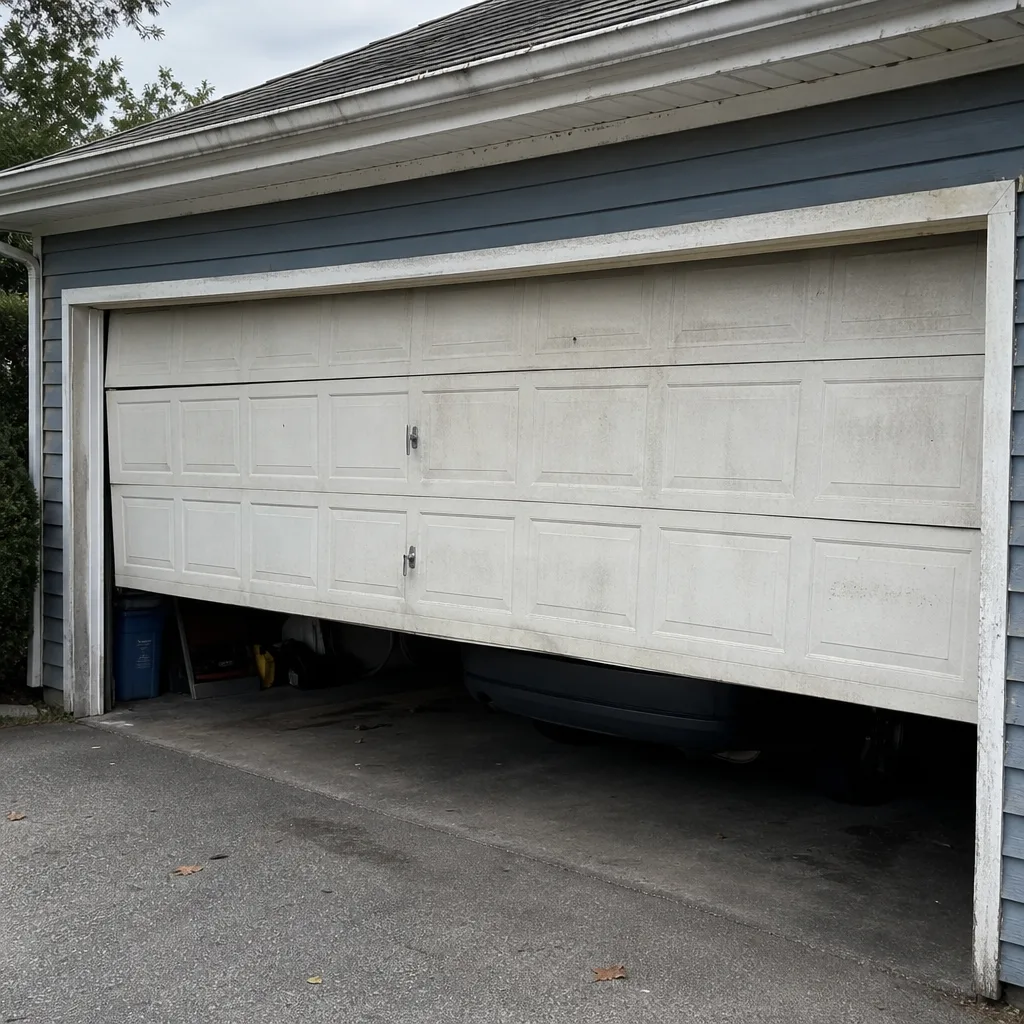 Before
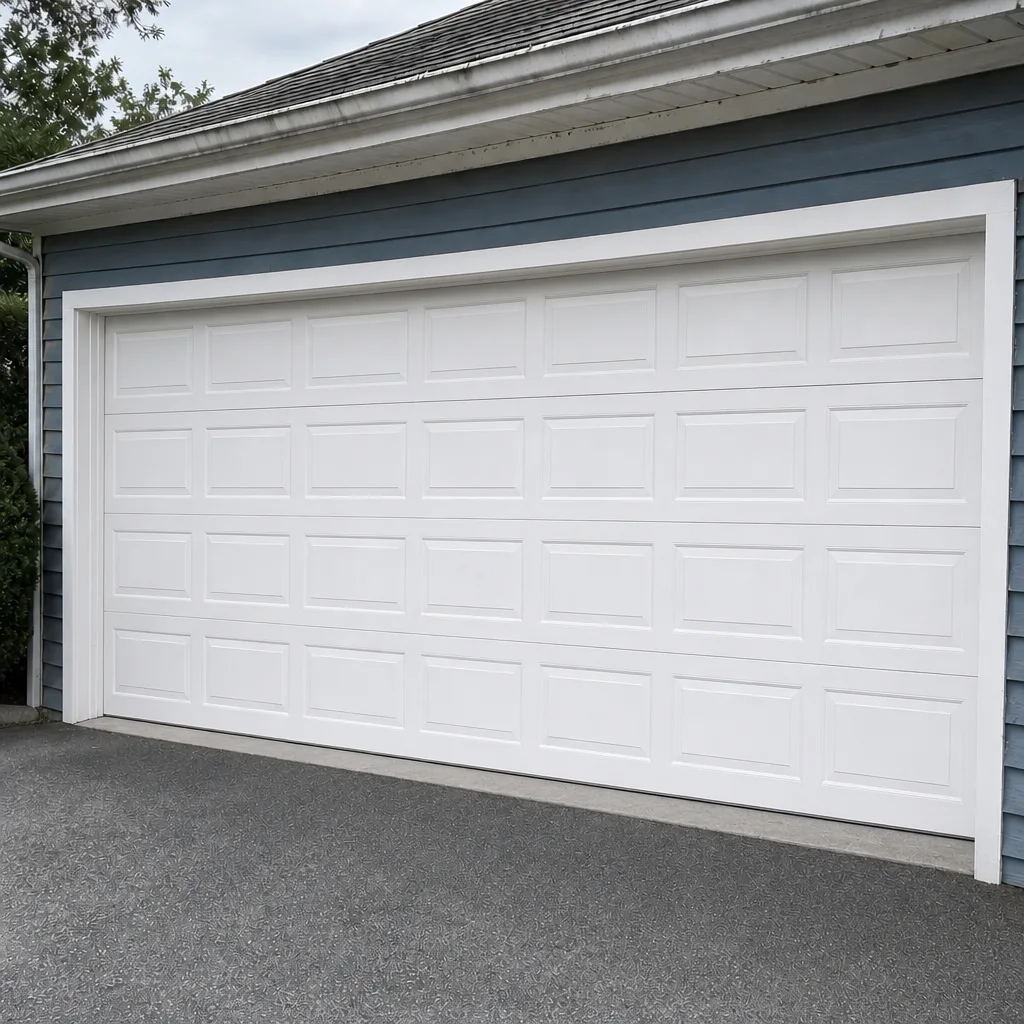 After
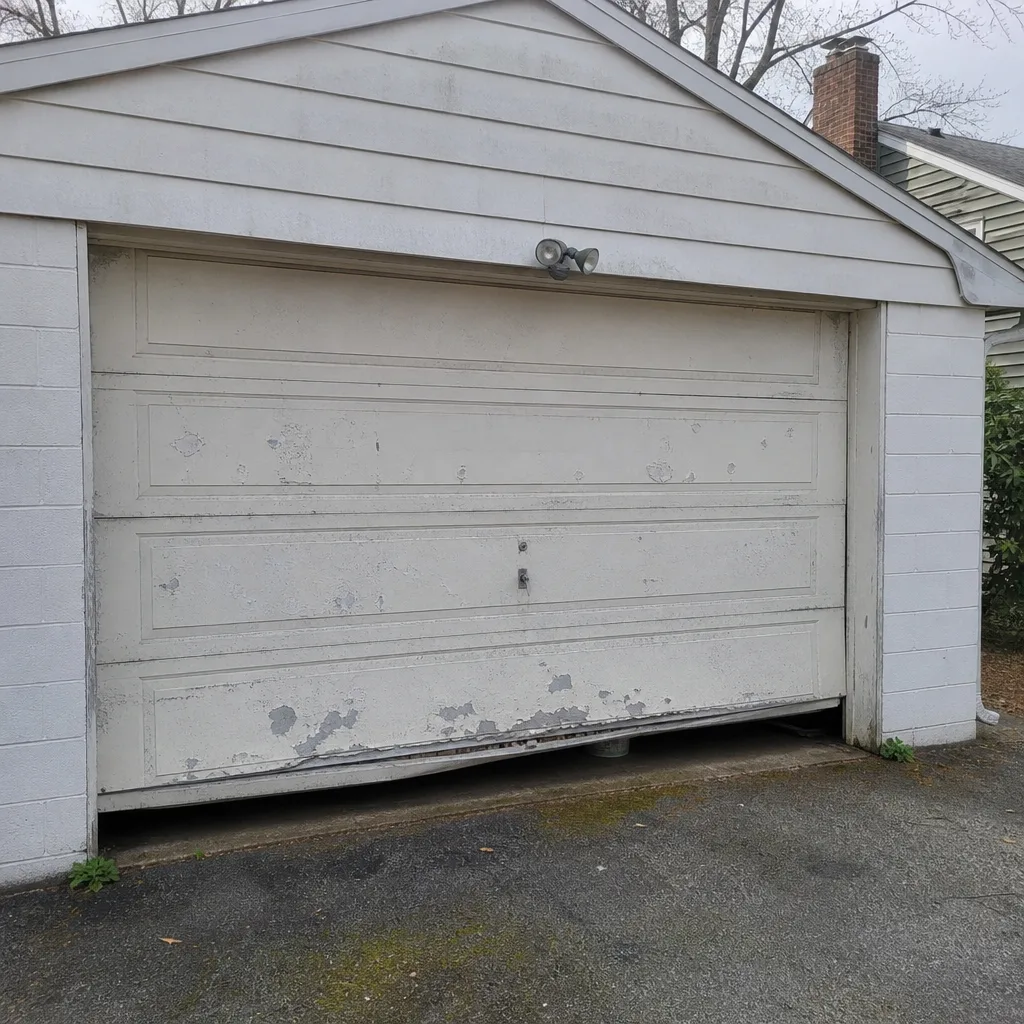 Before
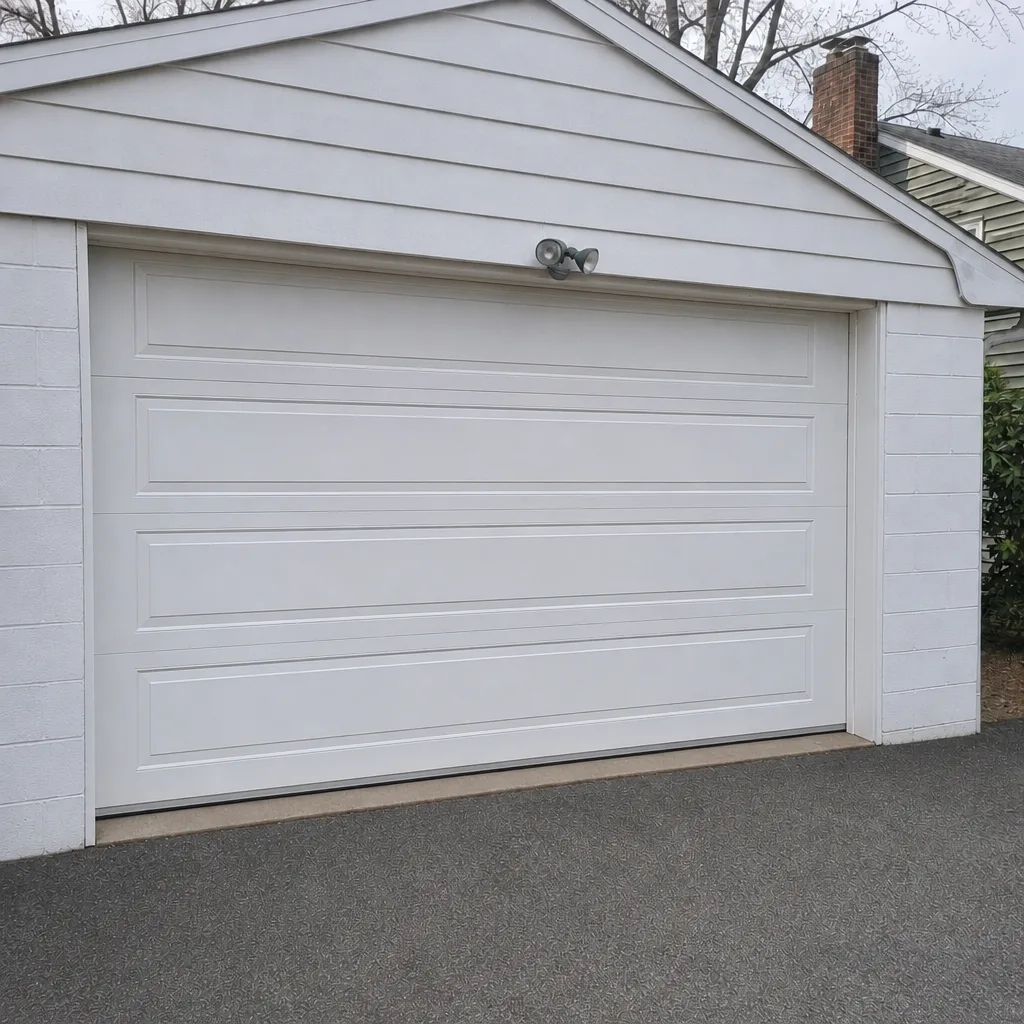 After
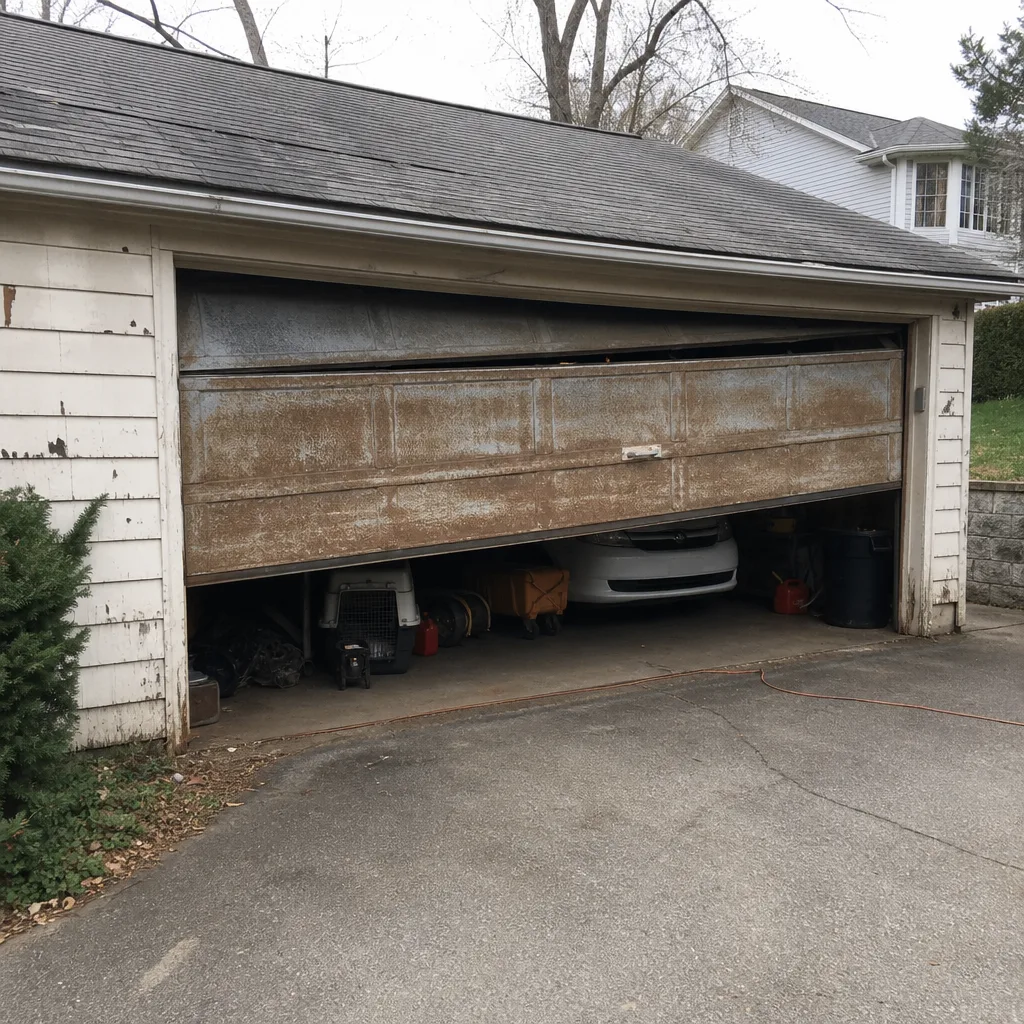 Before
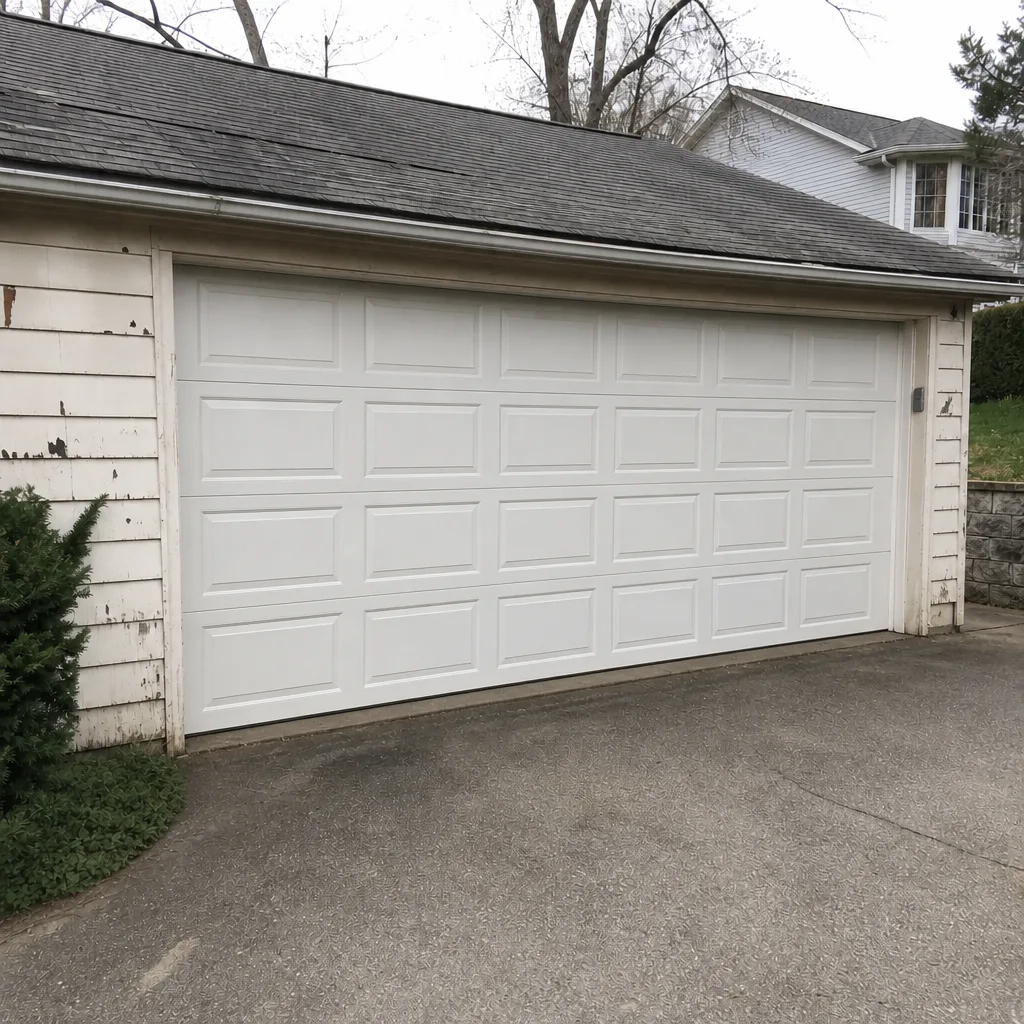 After
Frequently Asked Questions
No. Torsion and extension springs store enough energy to cause serious injury, and no homeowner should attempt to replace one without professional training and tools. Call (855) 658-4183 for a free estimate on spring replacement instead.
Yes, replacing your own opener on your own home does not require a state contractor. That said, the manufacturer’s warranty may require professional installation, and an incorrectly installed opener can fail to reverse on contact, which is a real safety issue. If the door has any age or the install isn’t clean, call (855) 658-4183 for a second opinion before you buy the unit.
Springs are typically priced per spring, and a matched pair is usually replaced together, so a pair runs higher than a single. Call (855) 658-4183 for a free written estimate specific to your door. The price is quoted and agreed before any work starts, so the number on the estimate is the number on the invoice.
Bottom seals, weatherstripping, keypads and remote programming, lubrication, minor hinge tightening, and visual inspections are all safe DIY tasks. Anything involving springs, cables, or track realignment is professional work. If you’re unsure which category your project falls into, call (855) 658-4183 and we’ll tell you honestly.
Often yes. We answer 24/7 and dispatch technicians from 7am to 7pm, Sunday through Friday, with same-day service available for most repair calls. Call (855) 658-4183 and we’ll confirm availability for your situation.
Most repairs don’t, but a full door replacement can, depending on the scope and whether the rough opening changes. The definitive answer is to call Stamford’s building department and describe your project. For any repair side of the work, call (855) 658-4183 for a free estimate.
The Bottom Line
The DIY-versus-professional question splits cleanly once you stop thinking about skill and start thinking about stored energy. Seals, sensors, keypads, lubrication, and inspections are fair game for any homeowner. Springs and cables are professional-only, no exceptions, and that’s a physics fact rather than a policy. Opener replacement is the middle ground where the choice depends on the door’s condition and your comfort with the electrical and mechanical details. In Stamford, the freeze-thaw cycle makes seasonal inspection worth the ten minutes, and it makes every aging spring a ticking component. When you’re ready for a diagnosis or a second opinion, call us. We know every major brand, we specialize in garage doors only, and we’ll tell you the truth about what your project actually needs.
Call (855) 658-4183 for a free estimate. We answer 24/7, and fast dispatch runs from 7am to 7pm, Sunday through Friday.
Written by the team at Garage Door Repair Stamford Pros.